What a window sill actually does
A sill is not just a piece of trim. It supports the lower part of the window opening, helps keep the sash lined up when the window is shut, and works as part of the seal that keeps water and outside air from slipping indoors. In a lot of homes, it also ends up being used as a shelf for plants, candles, or small décor. Seems harmless enough, but trapped moisture on that surface can wear the finish down faster over time, especially when the paint is already tired or the sill feels damp near the corners.
Why window sills fail in the first place
Most sill trouble comes back to moisture sitting where it should not. Sometimes water gets in from outside behind cracked caulk or failing paint. Other times it starts inside, when condensation forms on the glass and runs down onto the sill.
The same root causes show up again and again. Water often gets in when the flashing around the window is missing, incomplete, or poorly installed. Even a small gap can let moisture work its way behind the trim and sit there long enough for rot to start. Drainage problems lead to the same result. Gutters clogged with debris or a downspout dumping water too close to the wall can keep the sill wet far longer than it can handle. Condensation is the indoor version of that problem: warm air meets cold glass, water forms, and it drips down to the sill. If airflow in the room is weak, the cycle keeps going all winter. Failed caulk is another common one. Small cracks along the edges turn into an easy path for water, especially into the corners where decay usually begins. Age matters too. Older wood, especially when weathered or never properly treated, loses its resistance and starts breaking down faster.
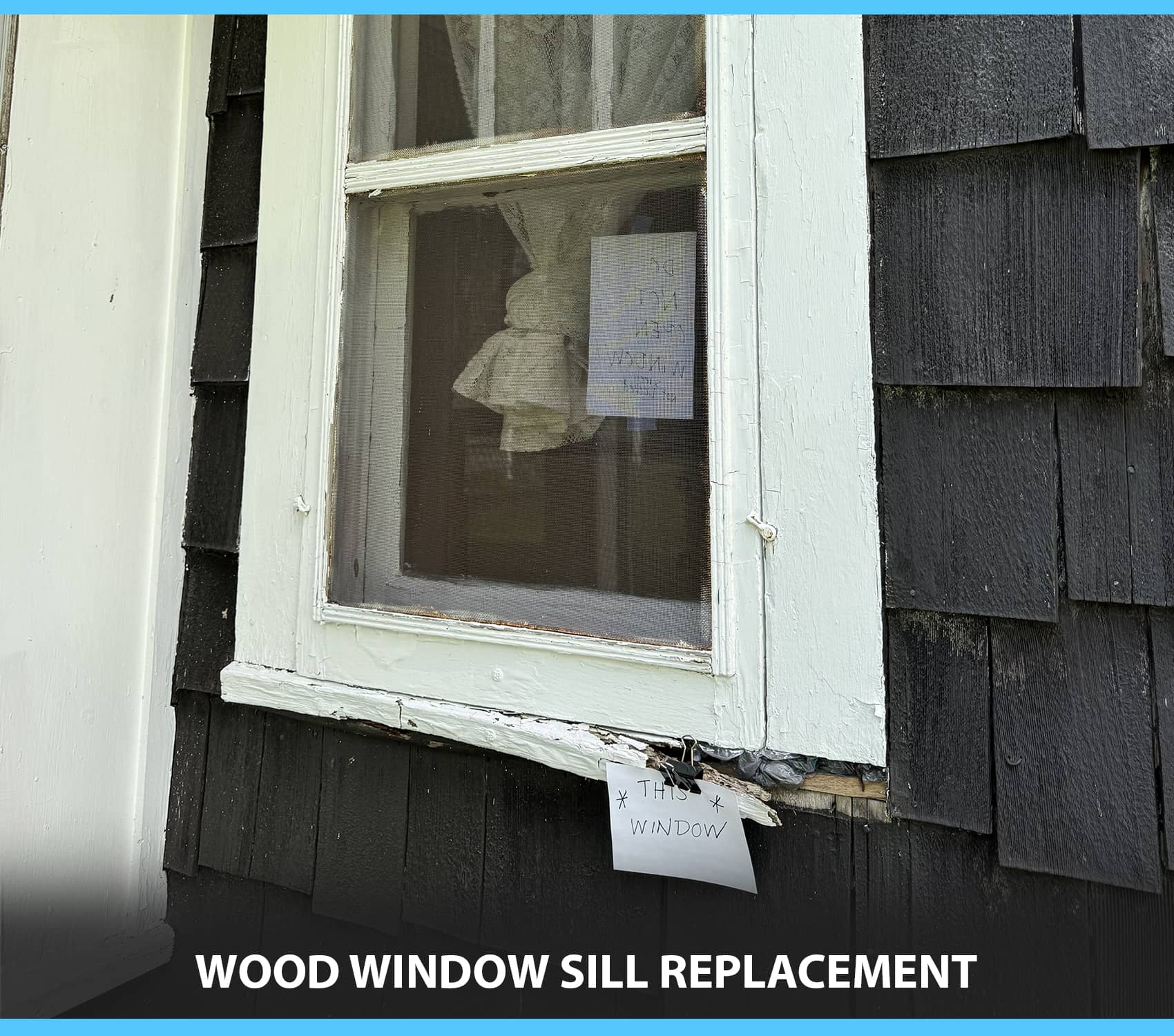
Once a sill begins soaking up water, it usually stops being only a sill problem. Moisture can spread into the nearby trim and even into the frame itself. At that point, what looked minor at first can turn into a much larger repair.
The signs that mean "don’t ignore this"
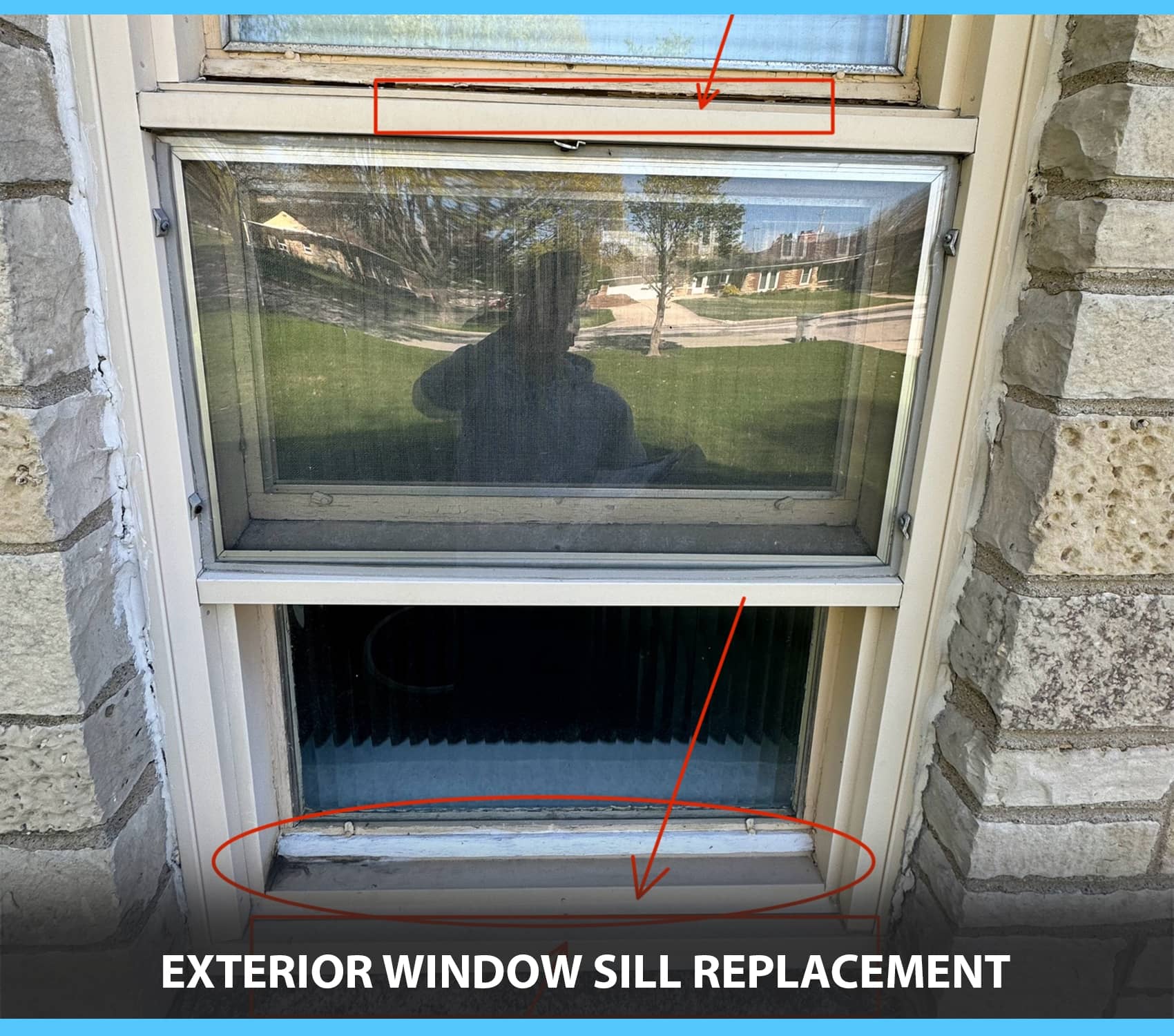
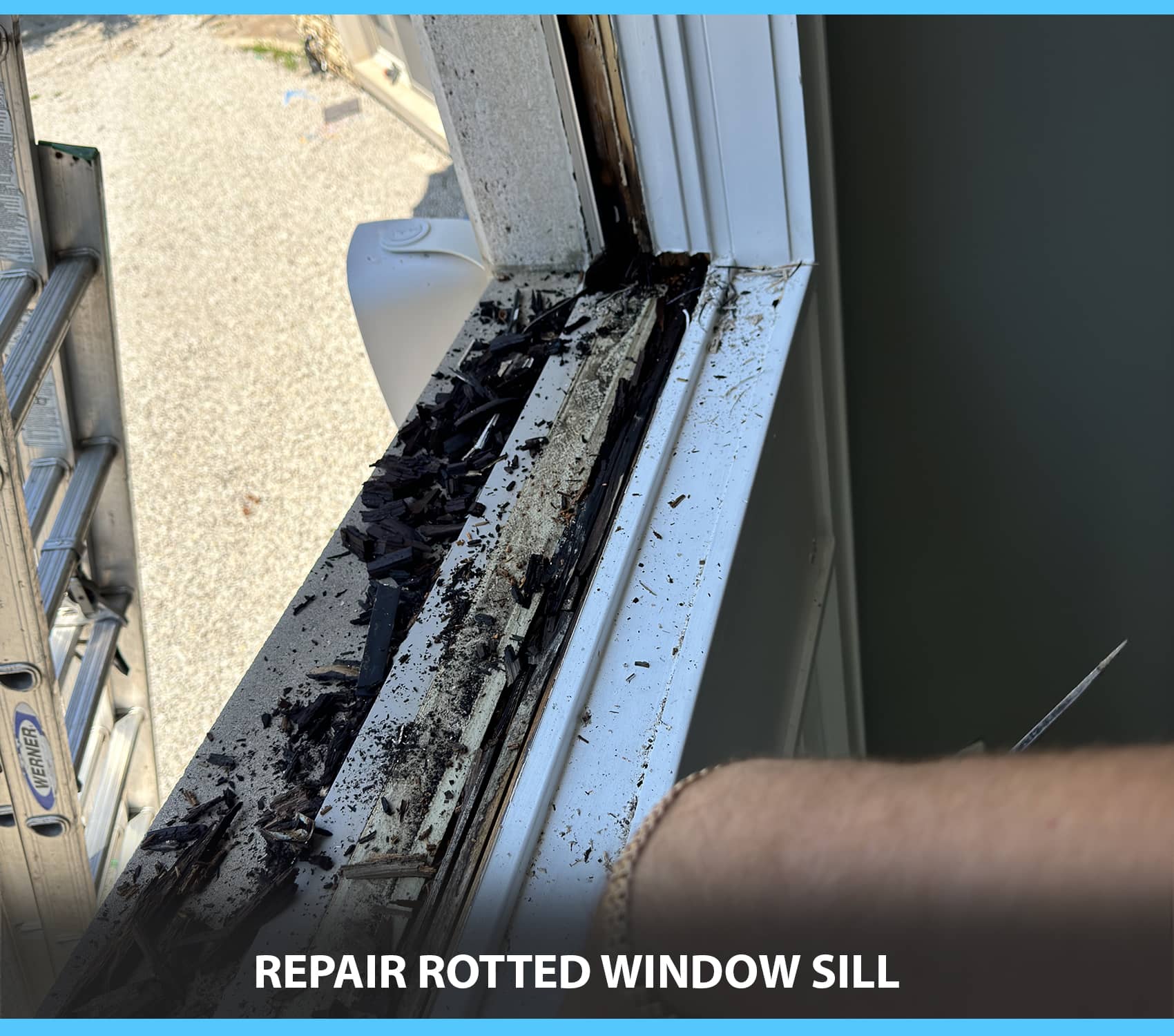
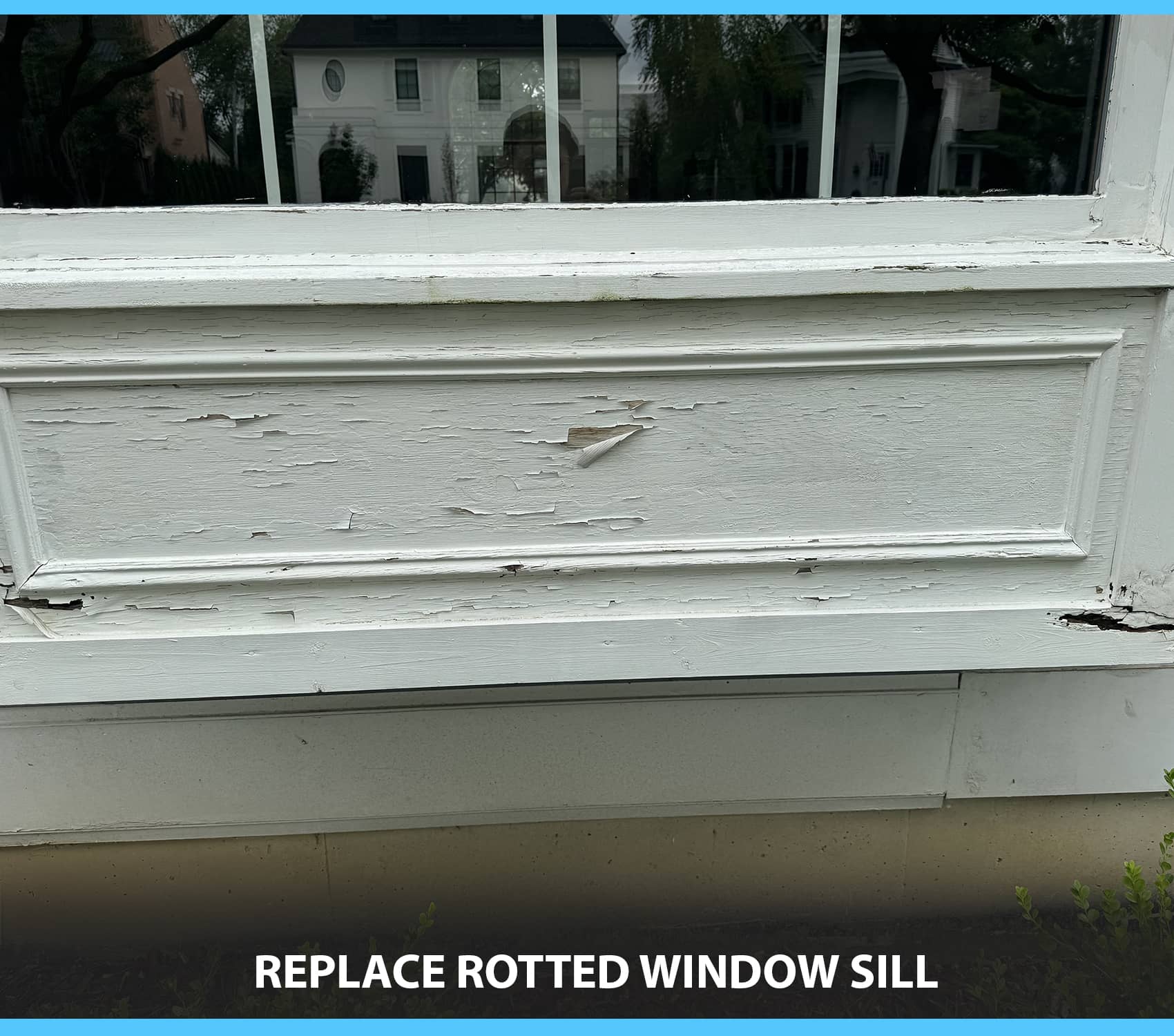
The first hints are usually easy to miss. Paint lifting or peeling along the front edge of the sill is one of the common ones. Dark marks, split corners, or bits of wood starting to crumble are another. If light pressure leaves the surface feeling soft instead of solid, the problem has already moved past looks. In some cases, there is also a stale, damp smell near the lower trim. Wood can stay wet for a long time before it starts looking obviously damaged from across the room.
Sometimes the window starts showing it too. A sash may drag, the lock may stop lining up cleanly, or a draft may show up on windy Charlotte days even with the window shut. That usually points to swelling or slight distortion in the sill and the wood around it.
Repair vs Replace: A Practical Decision Guide
Repair vs replacement: what’s realistic
The plain answer is this: repair is still a good option when the damaged wood can be cut back to sound material, rebuilt properly, and sealed well enough for the sill to dry the way it should. Replacement becomes the better call when decay has spread too far, when the sill is no longer doing its structural job, or when moisture is still getting in, because a patched area will break down again sooner than expected.
One number-based rules:
- If rot affects less than 10-25% of a wood sill, an epoxy repair is often workable. Once the damage spreads further than that, replacement is usually the better route.
Those percentages are not magic lines. They are simply useful shortcuts. The larger the rotted section, the harder it becomes to build a repair that lasts and still bonds into wood with real strength behind it.
Two other rules matter even more than the numbers. If the sill has weakened enough that it no longer supports the window frame securely, replacement is the safer move. And if water is still getting in because the flashing, caulk lines, or drainage issues were never fixed, even a well-done epoxy patch will not hold up for long. Ongoing moisture means the real cause is still there, and the decay will keep moving.
Go / Caution / No-Go decision tool
|
What you find during inspection
|
Go (Repair)
|
Caution (Repair only if conditions are right)
|
No-Go (Replace)
|
|
Soft/rotted area size
|
<10% of sill surface affected
|
Roughly 10–25% affected (needs solid tie-in + good sealing)
|
>¼ of sill affected
|
|
Structural feel (push test)
|
Firm wood after removing decay
|
Some softness near joints that can be fully removed
|
Sill feels weak or can’t support frame securely
|
|
Moisture source
|
Clearly corrected (caulk/flashing/drainage)
|
Likely correctable, but not yet fixed
|
Ongoing water intrusion/condensation causing repeat wetness
|
|
Spread beyond sill
|
Localized to sill edge
|
Minor trim involvement
|
Frame/surrounding wood also soft (scope expands)
|
What a durable repair actually includes
A proper sill repair is a lot more than filling a spot, sanding it down, and brushing on paint. It starts with figuring out what is really going on: surface wear, a small area of rot, or an active moisture problem that is still feeding the damage. From there, all compromised wood has to come out completely. Leaving anything soft behind usually means the repair will not last. The sound wood that remains is reinforced, often with a hardener, then the missing section is rebuilt either with a structural filler such as two-part epoxy or with a new wood insert shaped to match the original profile. Once that sets, the surface is smoothed out, primed, and painted so the sill has its protective shell again.
A solid exterior sill repair also deals with the joints around it. The right exterior caulk at the seams helps keep water from slipping in where the sill meets the trim, and the finish matters more than it may seem. Paint is not there just for appearance. It is what helps the sill stand up to rain, humidity, and hard summer sun in Charlotte.
Replacement material options
Choosing a sill material is not only about appearance. The bigger questions are how much upkeep it will need and how well it stands up to moisture, heat, and direct sun.
Wood is the traditional choice and does a good job with insulation, but it needs regular care because both sunlight and water wear it down over time. For that reason, some homeowners in Charlotte move toward newer wood products or switch to PVC when replacement time comes.
Stone sits at the top for durability. It lasts a long time, needs very little maintenance, and holds up well against fading. Another practical a
What "replacement" usually means on a sill job
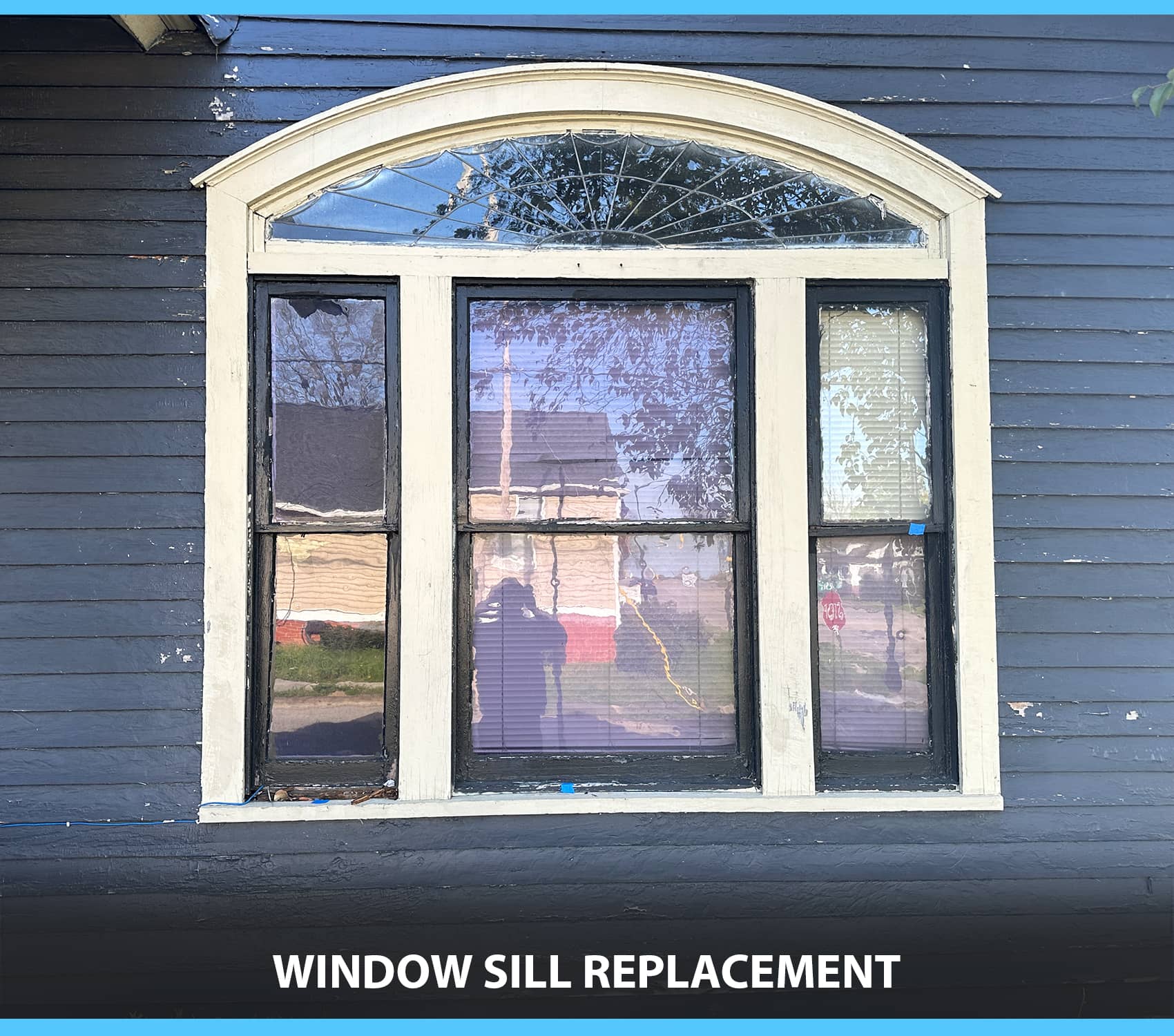
On sill work, replacement can mean a few different things depending on how the window was built and how far the damage has spread. In some cases, only the sill board or the outer nose needs to be changed. In others, the apron or nearby trim has to come off too, especially if the wood around the corners has gone soft or the paint has started blistering along the lower edge. The goal stays the same either way: restore the sill so it sheds water properly, supports the window opening, and closes back up tight without leaks or drafts returning.
When the job involves an interior sill replacement, appearance matters too. The new piece should match the original shape and finish so the repair blends in naturally instead of looking like an obvious patch dropped into place.
What sill repair or replacement costs
Online pricing is all over the place because the work itself can vary a lot. A basic sill replacement we offer at an average range of $240 to $524 per sill for standard mid-range work under conditions where access is straightforward, while also noting that real costs shift depending on site conditions and job choices.
The main things that usually move the price are access to the window, how much rot shows up after the area is opened, whether the surrounding trim or frame also needs work, and which material gets chosen.
Preventing the next round of rot
A solid sill repair is only part of the fix. The other part is stopping the conditions that kept the wood wet in the first place. Without that, the repair only delays the same problem.
The maintenance side is simple, but it works. Clean gutters and downspouts help keep water from spilling over and soaking the sill again and again. A common recommendation is to clear them at least twice a year so runoff does not keep pouring where it can do damage.
Caulk should also be checked once a year. Even small hairline cracks can let water work its way into the corners, and that is often where decay gets started. Sealing those gaps early is far cheaper than cutting out and rebuilding damaged wood later.
If condensation is part of the issue, indoor moisture and airflow need attention too. The idea is to reduce how much water forms on the glass and ends up running down onto the sill, especially during colder months when damp corners and repeated moisture buildup become more common.
And when a window is already being replaced, it often makes sense to upgrade sill at the same time. Rot-resistant materials, whether treated lumber or synthetic options, can add years to the new work. A drip cap above the window is another small improvement that can make a real difference.
When a sill problem is really a bigger window problem
Sometimes the sill is only the visible part of the problem. If rot has moved into the trim, the sash, or the frame, the repair plan needs to go further. Decay that gets left alone can weaken both the sill and the surrounding structure, and that is when larger issues start showing up: drafts, poor alignment, sticking operation, or windows that no longer close the way they should.
A proper inspection checks the whole lower section of the opening, not just the sill by itself. That includes the corners, the wood directly above the sill, and the adjoining trim. If the frame is already compromised, a sill-only repair can end up covering over the real issue instead of fixing it.
Conclusion
A bad window sill turns into an expensive repair mainly when it sits too long. Caught early, it may still be repairable: remove the rot, strengthen what remains, rebuild the missing section, and seal everything so water sheds off the way it should again. When the damage is widespread, the wood has lost its strength, or moisture is still feeding the problem, replacement is usually the more sensible route.
For homes in Charlotte, the clearest answer usually comes from a hands-on inspection of the sill, the lower corners, and the moisture path causing the trouble in the first place. Surface damage is only part of the picture. The repair plan needs to deal with the cause, not just cover what shows.