Start here: repair, glass-only, or full replacement?
The first step is sorting the issue into the right bucket: repair, glass-only service, or full replacement. A lot of homeowners go straight to "replace the whole thing." Sometimes that call is right. Sometimes it is not. The easiest way to avoid paying for more than the problem requires is to separate operation issues, sealing issues, and glass issues. In plenty of cases, only one of those is really failing.
Go / Caution / No-Go decision tool
|
Symptom you notice
|
GO: Repair/adjust
|
CAUTION: Glass-only replacement
|
NO-GO: Full door replacement
|
|
Door sticks, rubs, or drags
|
If the issue is hinge/fit related, alignment and hardware service may restore smooth movement
|
If you’re also changing the door’s glass layout, confirm the door stays square afterward
|
If the slab is warped or the system no longer closes securely, replacement becomes the durable answer
|
|
Drafts, cold spots, higher bills near the entry
|
If the door still fits, weatherstripping and sealing work often fixes comfort issues
|
If the insulated insert is also failing, you can solve sealing and glazing together
|
If damaged weather seals come with broader wear (won’t close right, locks poorly), replacement is often justified
|
|
Lock is hard to throw; door won’t lock consistently
|
Realignment and lock/strike service can work when the door still fits correctly
|
Glass work can change stress on the system; confirm latch alignment at the end
|
If the door geometry is off, new hardware won’t stay happy for long
|
|
Cracked, chipped, shattered, or fogged door glass
|
If it’s only the glass that failed, you can often replace just the pane/unit
|
This is the "sweet spot" when the door/frame are sound
|
If the door cutout/frame is compromised—or the change is beyond what the door can support—replacement is the safer path
|
|
Visible rot, deep water damage, heavy structural deterioration
|
Limited repairs may buy time if damage is truly superficial
|
Glass-only work won’t fix structural door problems
|
When damage is extensive (rot/warping/cracking), replacement restores reliability
|
A common replacement pattern tends to show up as a group: the door drags, sticks near the frame, or stops closing cleanly, and at the same time there is a draft on windy days, trouble with the lock, or worn weatherstripping. When those problems start stacking up, the door is usually losing both its fit and its seal.
Catching that early matters. Left alone, it can turn into a steady mix of security worries, higher utility bills, and quick repairs that never hold because the door no longer wants to stay square.
What "Entry Door Repair & Replacement Services" usually include
Most jobs fall into a few practical lanes: getting a door back into proper working order when it starts rubbing, sagging at the hinge side, or slipping past the latch; cutting down drafts by improving the fit and replacing worn weatherstripping when outside air starts creeping in during blustery Charlotte weather; repairing or replacing cracked, loose, or rattling glass inserts; dealing with material wear like rust on a steel surface, soft dark wood along the bottom rail, or peeling paint that begins to let moisture sink in; and replacing the whole unit when the slab or frame has deteriorated too far to count on anymore. When glass is broken out, many crews treat it as a security issue before anything else. The usual order is simple: inspect the damage, take exact measurements, secure the opening if needed, and come back with the correct glass instead of trying to make a rough guess fit.
Material-by-material: common failures and the right service
"Entry door" sounds like one simple category, but the right repair approach shifts depending on what the door is made of. A fix that makes sense for wood may be the wrong move for steel, and the reverse is just as true.
Material Service Match table
|
Door material
|
Typical problems you’ll see
|
Service that often fixes it
|
When replacement becomes the smarter call
|
|
Wood
|
Moisture-driven swelling, sticking, finish breakdown, and rot if water gets into unprotected areas
|
Fit/alignment work; targeted repair; protective coatings and exposure control
|
When rot or structural damage is extensive and the door can’t hold alignment or seal reliably
|
|
Steel
|
Rust if moisture breaches the coating; dents can become a long-term appearance issue
|
Surface treatment for light rust; sealing and hardware work; refinish/repair for minor damage
|
When damage is extensive or the system is failing as a sealed, secure entry
|
|
Fiberglass
|
Usually low maintenance; the issues are often configuration/fit, not constant upkeep
|
System-level replacement or rework focused on fit, sealing, and hardware engagement
|
When you need a major performance jump (seal + security + layout) that repairs can’t deliver
|
|
Composite-style systems
|
Complexity is in the system: frame design, reinforcement, insulation, and lock architecture
|
System-level replacement that prioritizes stable fit, sealing, and lock engagement
|
When the system can’t be stabilized and you’re chasing drafts/locking issues repeatedly
|
That difference matters when the time comes to choose. Steel doors are often considered energy-efficient in part because many have a foam-filled core, and they are also known for staying more stable through weather changes instead of shrinking or warping easily. In a Charlotte climate, that can be a real advantage. Still, there is a tradeoff. Steel tends to show dents pretty easily, so appearance can become a real concern in busy entryways.
Fiberglass follows a different service path because it is widely known for holding up well against dents, cracks, splits, and warping. For long-term everyday wear, that kind of durability counts. It also explains why many fiberglass replacement jobs are less about the slab alone and more about choosing the right setup, glass package, and hardware so the whole door system works the way it should.
If the door is built from something not specifically covered here, like a hybrid build or vinyl-clad construction, the way the problem gets diagnosed stays mostly the same: fit, sealing, hardware engagement, and glass condition still shape the service decision. The only real difference is that the repair path usually leans more heavily on the manufacturer’s method for that specific outer material or cladding.
Drafts and air leaks: fix the seal before you replace the slab
A drafty front entry usually traces back to one of three things: weatherstripping that has worn down, a door that has shifted out of line, or a slab that has moved enough to change the way it meets the frame. When the door still shuts properly and the latch catches where it should, the seals are usually the smartest place to start.
Сheck the weatherstripping every year and replace it when it starts flattening out or tearing. Once those seals wear down, outside air is only part of the problem. The lockset and latch also start working against uneven pressure, which makes the whole door feel less cooperative. The pattern is familiar enough: weaker sealing leads to higher utility costs, chilly air around the entry, and those cold spots that show up near the floor on windy Charlotte days.
A couple of prevention details carry more weight than they seem to at first. Repeated slamming shortens the life of the door system, and proper sealing during installation is not some extra finishing touch. It is part of whether the door works right at all. If the original install missed that step, drafts can keep coming back while the slab gets blamed for a problem that started elsewhere.
When outside air shows up together with a door that will not close tight or a lock that suddenly takes effort, that combination usually means more than bad weatherstripping. Drafts paired with locking trouble or rough operation often point to alignment problems, poor fit, or a door system that is simply wearing out beyond dependable service.
Sticking, dragging, and misalignment: what the door is telling you
A sticking door is usually not hard to read. In most cases, it is reacting to humidity changes, sagging hinges, or subtle frame movement. If the slab only binds in summer or starts scraping when the weather turns cold, that seasonal pattern is a strong clue that moisture and temperature are part of the problem.
Misalignment tends to show itself in very specific ways. The door may stop closing the way it used to, start rubbing at the threshold, or pick up a squeak where the edge is dragging against the frame. Those signs do not automatically mean replacement. More often, they mean the door’s shape and fit need to be brought back into line so the latch works properly and the seals can compress the way they were meant to.
We connect those symptoms to bigger consequences than simple annoyance. A door that has swollen, dropped at the hinges, or shifted out of square can become a security concern. It also puts extra strain on locks, hinges, and related hardware, because those parts end up carrying force they were never meant to absorb day after day.
Prevention in a house with a habitually sticking door is not glamorous, but it works: keep hinges snug, add lubricant before they start grinding, watch indoor humidity, and check the alignment from time to time. Once swelling has already happened, the repair path is usually straightforward. Adjust the hinges, trim the spots that have expanded, or move to replacement when the warping has become too severe to correct with a lasting fix.
Locks, latches, and hardware: when "bad lock" is really a "bad fit"
A lock that starts acting up is often taking the blame for a fit problem, not causing it. Wear, rust, and stripped screws absolutely matter, but when the latch stops meeting the strike the right way, even decent hardware can start feeling unreliable, loose, or unpredictable.
Two basic habits prevent a lot of lock trouble: a light annual application of lubricant in the lock and handle, and tightening screws before the hardware starts shifting out of place. Once the problem is already there, the usual repair path is pretty direct. Rework the alignment, repair or replace the mechanism, or install a new lockset if the old one is simply worn beyond trust.
Hinges deserve the same level of attention because they control the door’s position from top to bottom. A perfectly usable slab can seem like it has failed when the hinges are dry, loose, or starting to sag, especially if locking only works after lifting the handle or pulling the door tight by hand. A practical maintenance rhythm is simple: silicone-spray lubrication every few months, plus routine screw checks so the hardware does not gradually drift.
Rot, rust, and finish failure: cosmetic issue or structural problem?
Material breakdown usually follows the material itself. Steel develops rust. Wood begins to rot. Paint and protective finishes fade, crack, or peel faster when the entry gets hit by direct sun, hard rain, and Charlotte humidity. The real question is whether the damage is still at the surface or has already started affecting the structure underneath.
For both steel and wood, prevention mostly comes down to keeping moisture from settling in. Weather-resistant paint or sealant helps, direct water exposure should be limited wherever possible, and a protective overhang can make a bigger difference than expected. Finish care also has its own rhythm. Renewing protective coatings every few years, with an awning or storm door sometimes serving as a practical buffer when the front entry takes regular weather exposure.
When the damage is still minor, the repair language stays pretty plain: sand it down, treat the rust, cut out or stabilize light rot. Once the deterioration spreads, replacement stops being about looks alone. At that stage, the real goal is getting back structural strength and restoring a door that can lock properly and seal evenly again.
Glass problems: broken, fogged, or outdated inserts
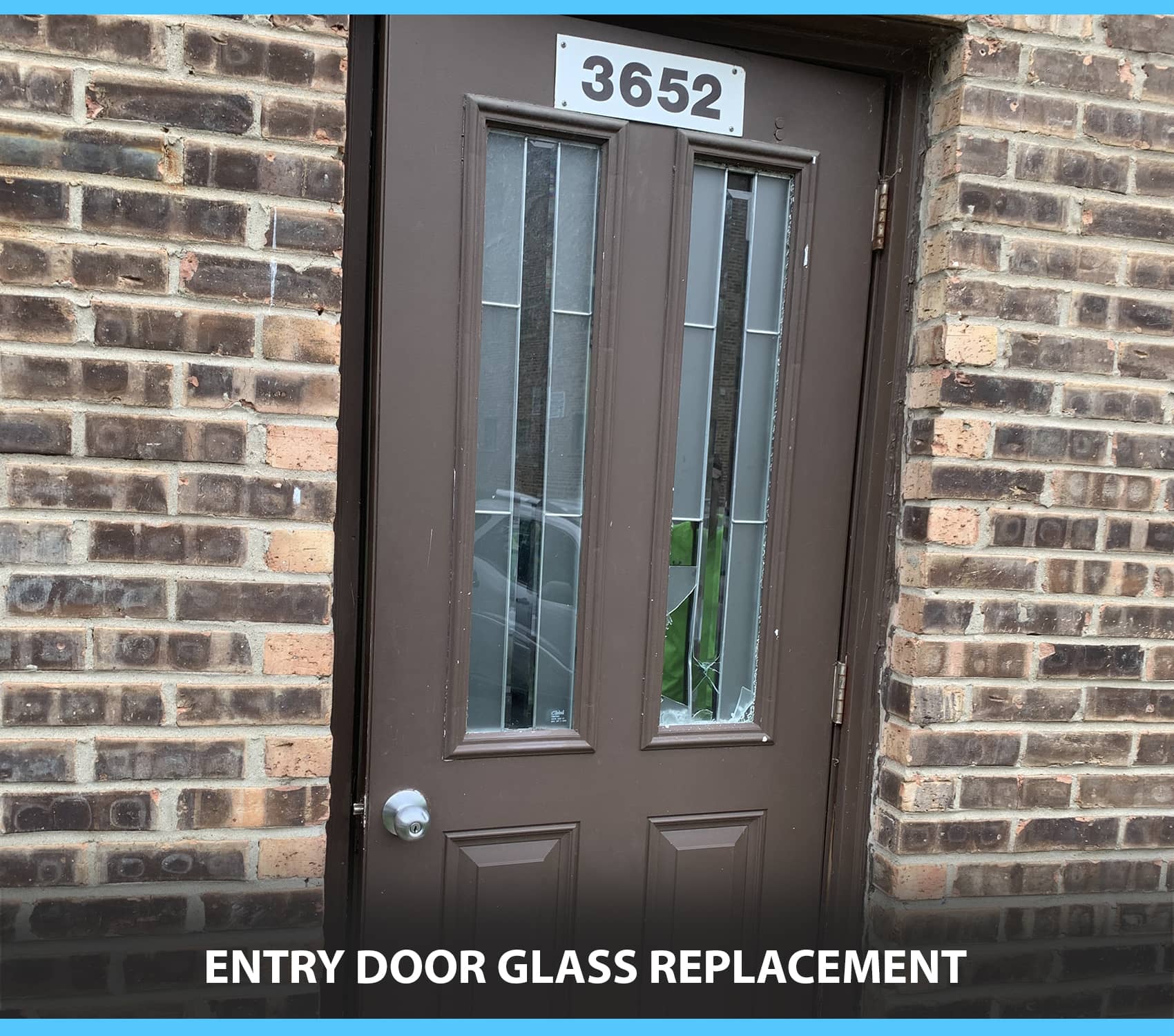
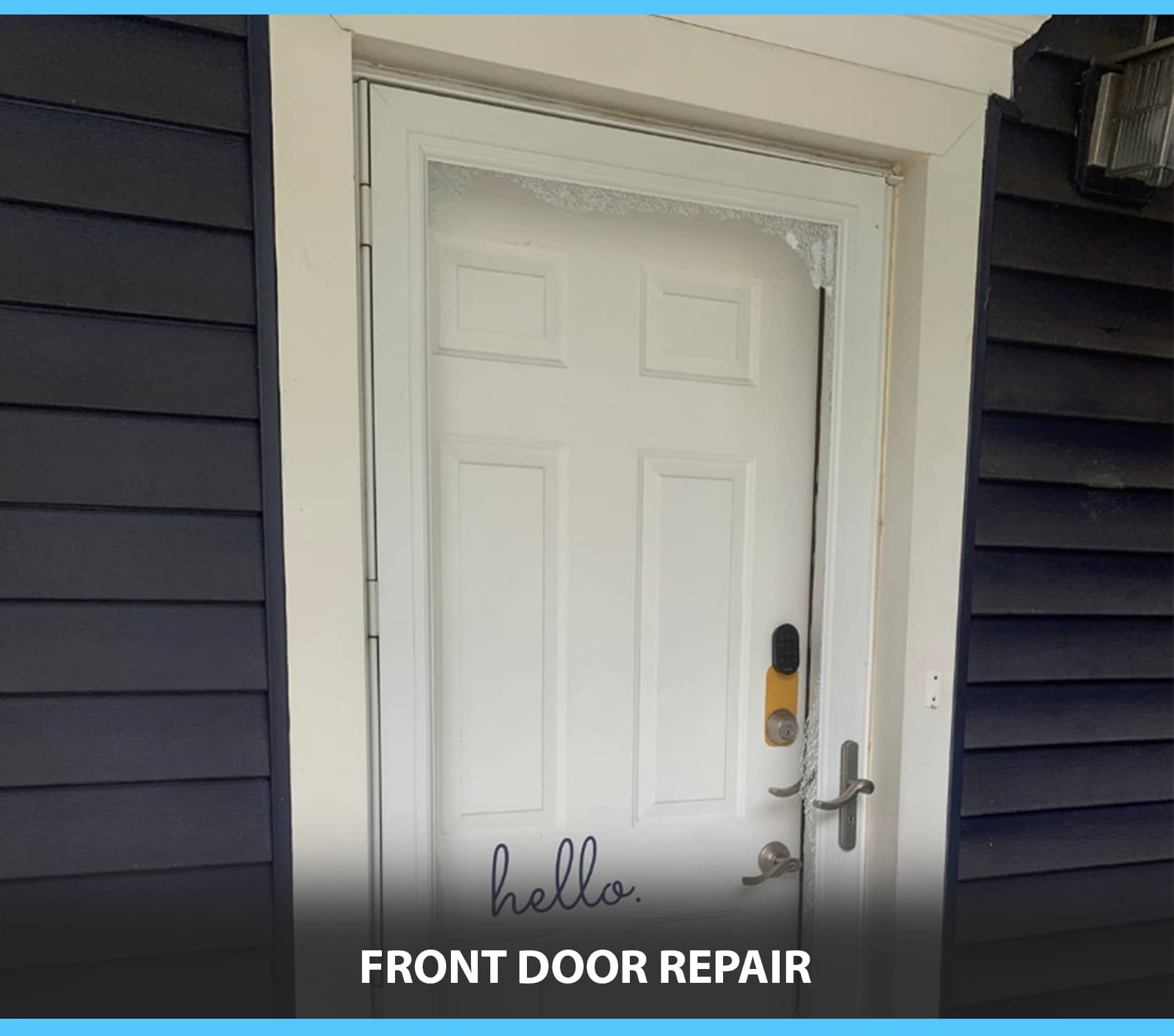
Door glass usually fails in one of two ways. It breaks because of impact, edge damage, or a chip that keeps spreading. Or it turns cloudy when the seal inside an insulated unit gives out. In both cases, the first thing that matters is the condition of the door and frame around it. If those parts are still solid, glass-only replacement is often the most sensible scope of work.
Glass problems tend to become urgent for a practical reason. Entry-door inserts come in all kinds of shapes, sizes, and layouts, and once glass shatters or starts rattling loose, the replacement usually needs to happen quickly and it needs to be measured properly. Otherwise the door may stop sealing the same way or start operating differently afterward. This kind of work depends on technicians who can measure accurately, handle the glass correctly, install it cleanly, and show up prepared instead of making repeated trips for missing tools or parts. For real breakage emergencies, some services also promote round-the-clock availability for entry glass replacement.
Glass-only replacement: what actually gets replaced
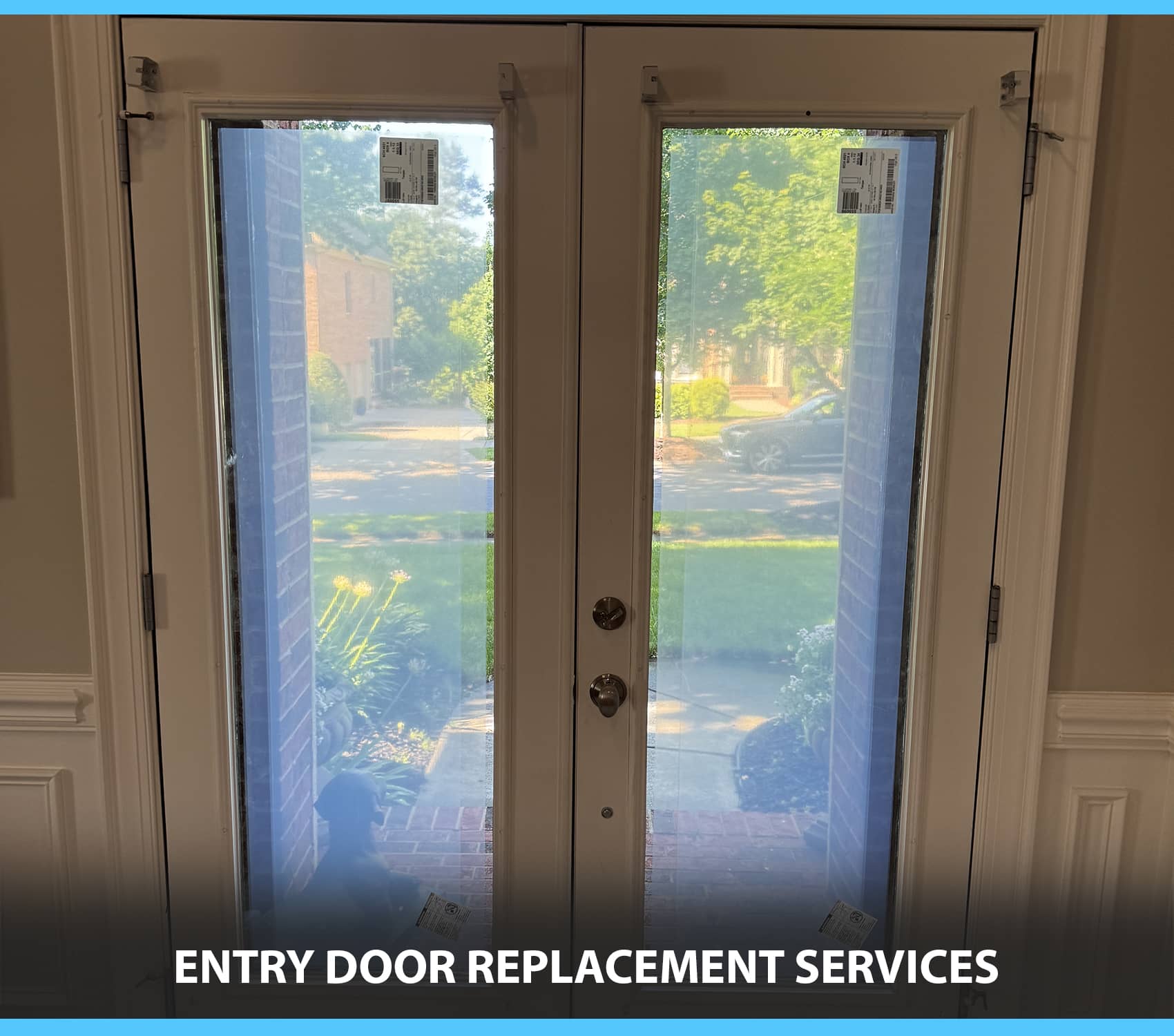
With a basic single pane, the pane itself gets replaced. With a newer insert, the job may involve swapping out an insulated double-pane unit, meaning two pieces of glass sealed together with an air space between them. Once that seal fails, moisture or haze between the panes is the usual giveaway, and replacing that sealed unit is the repair that actually solves the problem.
This is the point where small details stop being small. Replacement glass has to fit the door’s design requirements, and thickness is part of that. Common thicknesses listed for entry-door replacement glass include 1/8", 3/16", and 1/4". That detail matters because the glass has to sit correctly in the glazing channel and against the stops. A mismatch can easily lead to fresh leaks, new rattling, or fit problems that were not there before.
There is a prevention pattern here too. Repeated slamming shortens the life of the insert, better sealed units usually hold up longer, and early condensation should not be brushed off. Fogging rarely begins as a full collapse. More often, it starts as an early warning that the seal is already slipping.
Single pane vs double pane: comfort tradeoffs you can feel
Single-pane replacement is usually treated as the quicker, lower-cost route, but it does less to slow heat transfer. Double-pane insulated glass is generally viewed as the more current standard because it creates a stronger barrier between outdoor conditions and the interior. When the entry still feels chilly even with the heat running, the glass itself may be part of the reason.
Safety glazing choices: tempered vs laminated
For door glass, safety matters for a simple reason: it sits in a high-contact area where people, pets, bags, and daily traffic all come close to the surface. So, the glass in a door should be safety glass.
Tempered glass is often the go-to choice because it is strong in everyday use and, when it does fail, it usually breaks into small blunt pieces instead of dangerous sharp shards. Laminated glass is chosen for a different set of priorities. It is often associated with added protection in harsh weather, better performance in high heat, and improved control over UV exposure. The better fit depends on the kind of risk at the entry and how exposed that part of the house really is.
Energy upgrades inside the glass: Low-E, IGUs, argon
When door glass is already being replaced, skipping the built-in efficiency upgrades usually means passing up one of the biggest benefits of the job.
Low-E glass is commonly described as having a nearly invisible coating that helps reduce heat loss. Low-E options and insulated glass units are also often credited with cutting down UV exposure that can fade floors, trim, and furniture, while improving the barrier between outside temperature swings and indoor comfort. In some double-pane units, argon gas is added between the panes to improve insulation even more.
Put simply, these upgrades are aimed at making the space near the door feel steadier and more comfortable. They also help reduce that "cold glass" sensation that can make an entry feel drafty, even when the weatherstripping is still doing its job.
Decorative glass, shapes, and privacy: make the light decision like you’ll live with it
Swapping out a door insert is one of the fastest ways to change the feel of an entry. Common shape choices usually fall into familiar groups: oval, square, rectangle, arch-top, round-top, sunburst, and full-view designs that run much farther down the slab.
And shape is only part of the decision. Glass options are often sorted by color, thickness, and surface pattern, while contractors may steer the choice toward practical categories such as decorative glass, double-pane units, all-weather glass, or more energy-conscious options depending on what the entry actually needs to fix.
It is also one of the simplest ways to update the look of the front door without replacing the whole unit. When the glass is already being changed, switching the pattern or style can freshen the entry almost the same way new hardware does, but without removing the slab.
Before chasing the brightest possible setup, it helps to think about privacy in real-life terms. A front door facing steady foot traffic or sitting in a direct sightline can make the foyer feel exposed fast, especially after dark when interior lights are on. If the entrance is recessed, shielded, or farther back from the street, brighter glass usually works more comfortably. Patterned and etched styles are often chosen for exactly that middle ground: they keep the daylight, but soften the view and block the details.
If you’re replacing the whole door: pick the right material first
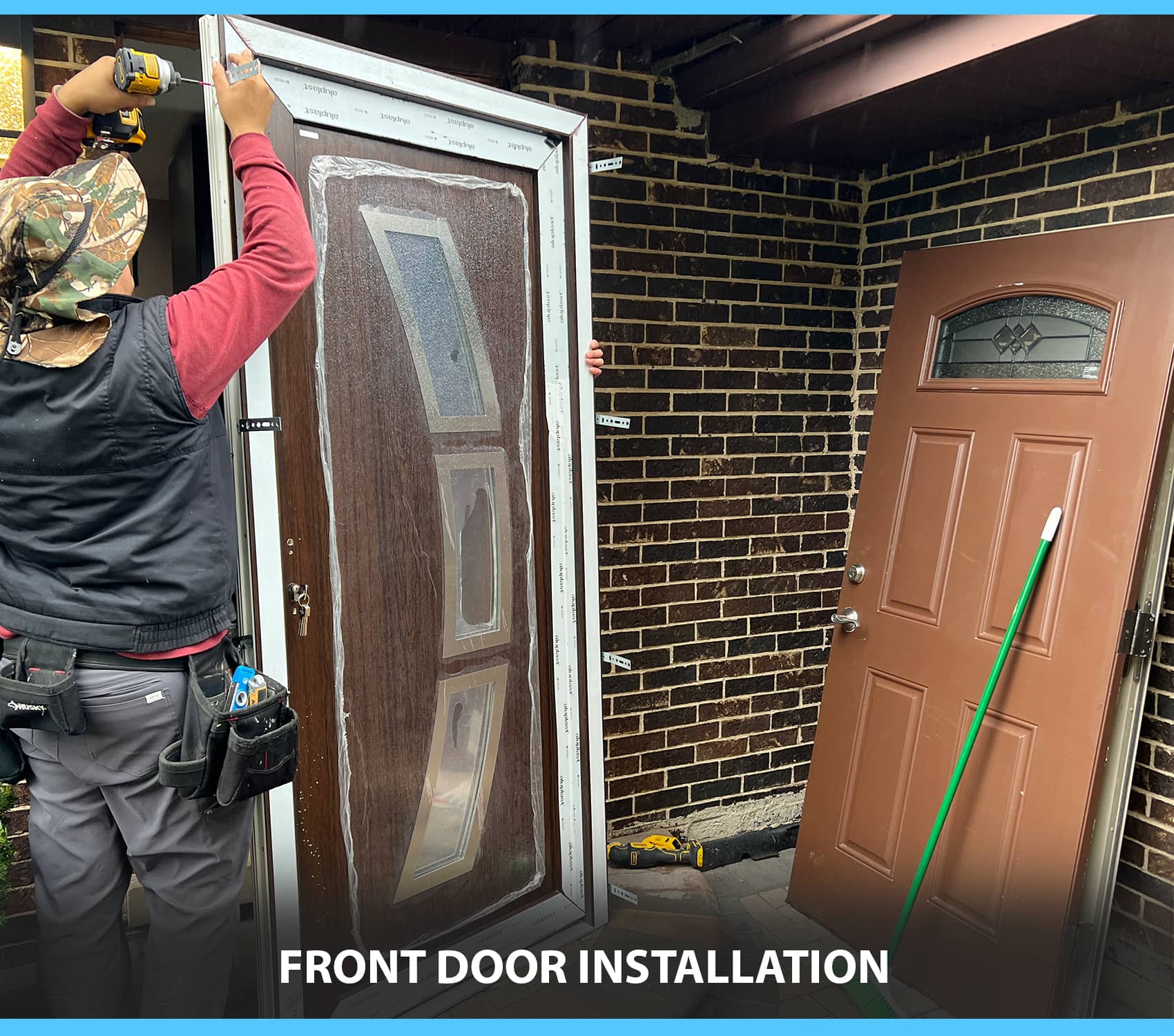
If a full replacement is the right move, the first real choice is the material. That decision affects how the door holds up, how much upkeep it asks for, and how it will look years from now.
Wood has the classic look many people still want, but it is usually the most demanding option in terms of maintenance, and it can get expensive. Steel is often treated as the practical value choice: typically foam-filled for better insulation, usually easier on the budget, and less likely to shrink or warp as weather shifts. In Charlotte, that kind of stability can matter. The downside is appearance. Steel dents more easily than many people expect, so in a busy entry where marks and scuffs show up fast, that tradeoff is real. Fiberglass often lands in the middle for a reason. It is commonly seen as durable, lower-maintenance, usually built with an insulated core, often textured to mimic wood, and generally less susceptible to denting than steel.
When the goal is lower upkeep and a door that keeps a consistent seal over time, material is doing more than shaping the look. It is shaping how the system performs.
Configuration: single vs double, sidelights, transoms, and what “grand entrance” really means
Layout is where a lot of homeowners end up choosing the wrong answer for the opening they have. The better configuration is the one that fits the way people move through the entry, the amount of daylight the space needs, and what the framing can realistically support.
A single entry door can be set up as left-hand or right-hand inswing. If more natural light is the goal, but a full glass door feels too exposed, sidelights can solve that without turning the whole front entry into a display window. One useful distinction is that sidelights are often offered in two basic forms: direct-set, where the section is essentially all glass, and panel-set, where the glass sits within its own framed panel. That one choice changes privacy, proportions, and the overall feel of the entry more than it may seem at first.
Conclusion
A failing entry door is rarely dealing with only one issue. Drafts, sticking, and lock problems often point back to the same root cause: the system is no longer holding its shape or sealing the way it should. Glass failure is a separate track, and often the least expensive one to correct when the frame and slab are still sound. The smartest approach is usually to start with the symptoms, choose the smallest repair that restores safety and performance, and put upgrade money into the things that change daily living most: a stable fit, dependable lock engagement, strong sealing, and glass that improves comfort and privacy.