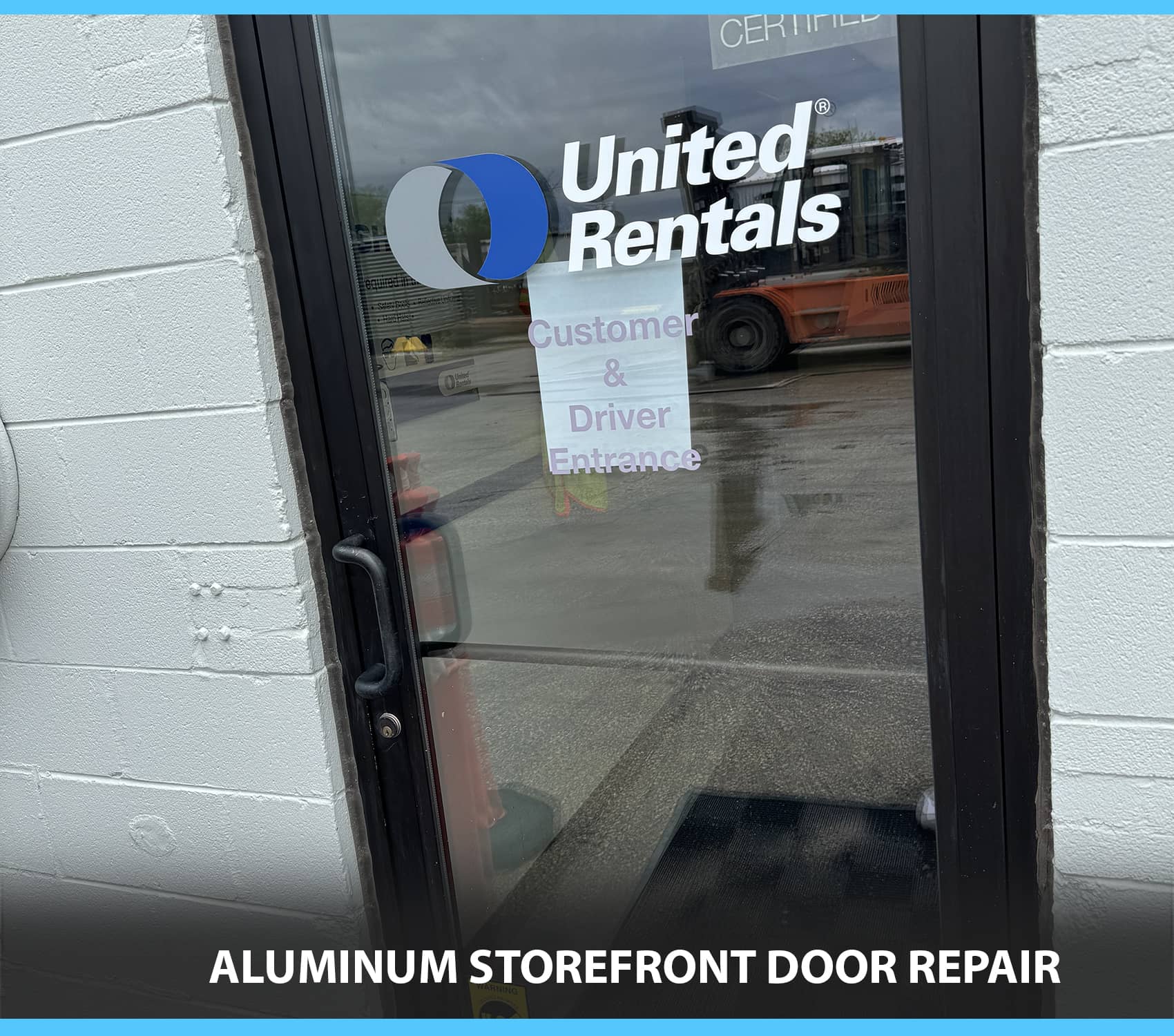
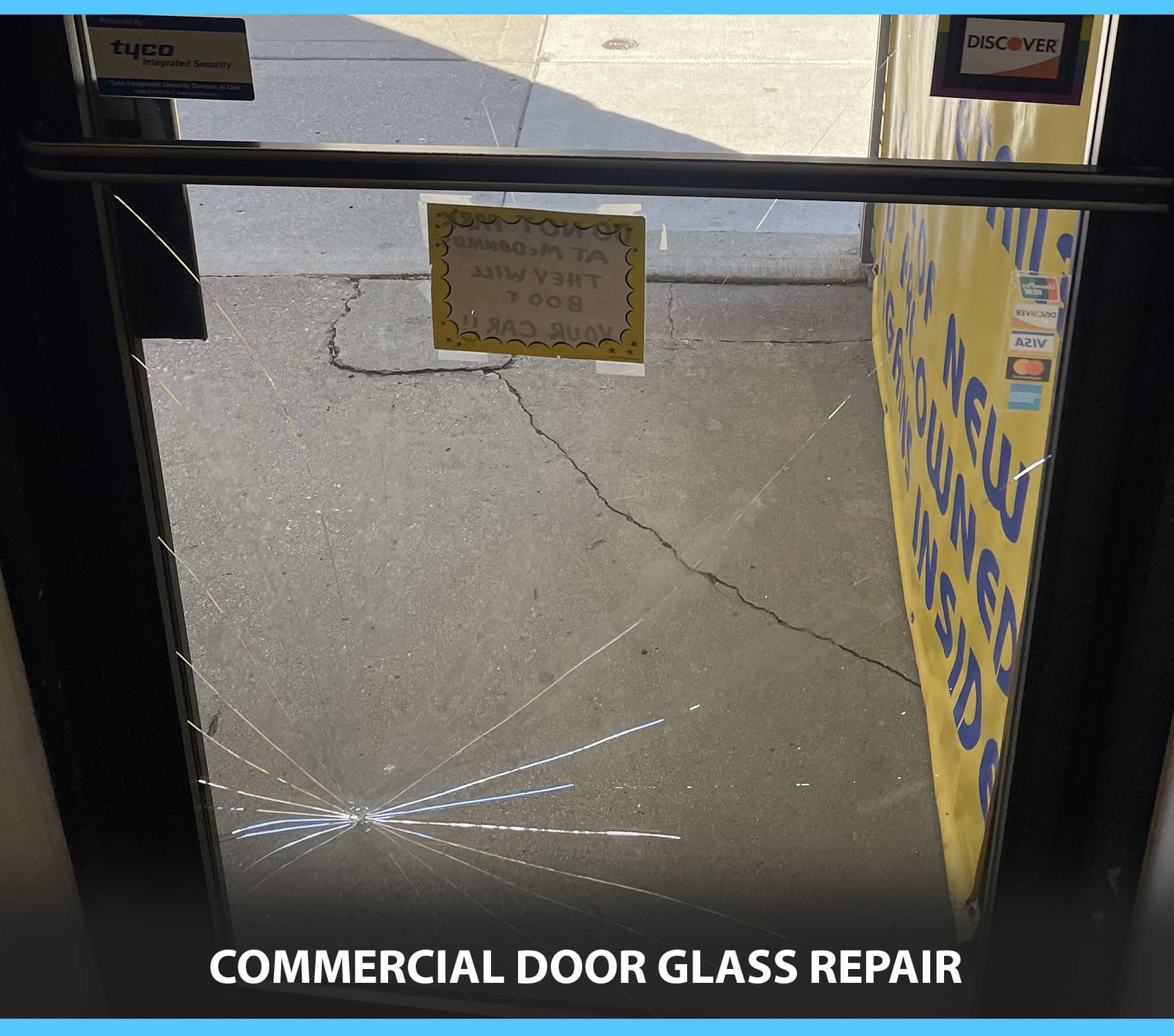
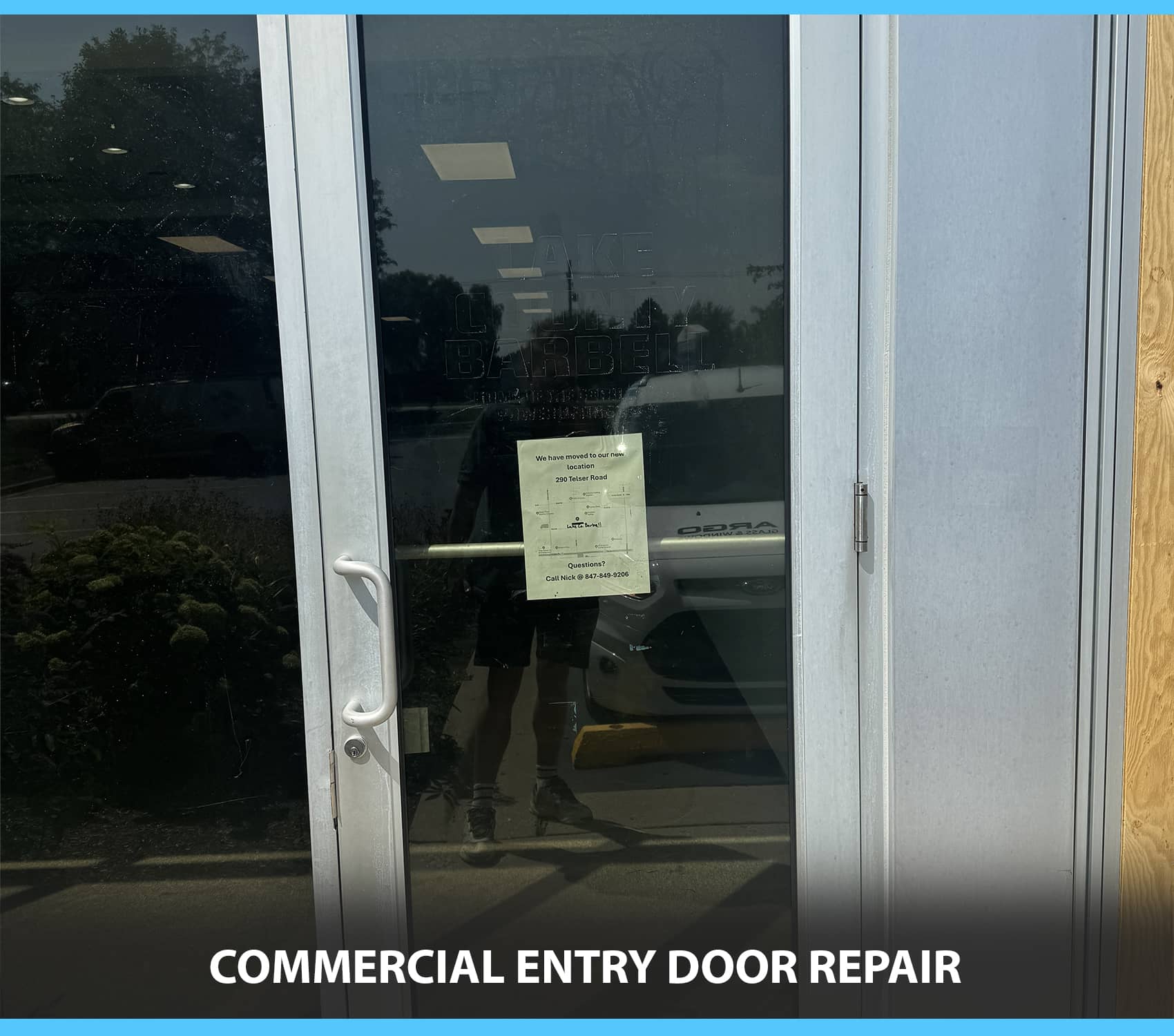
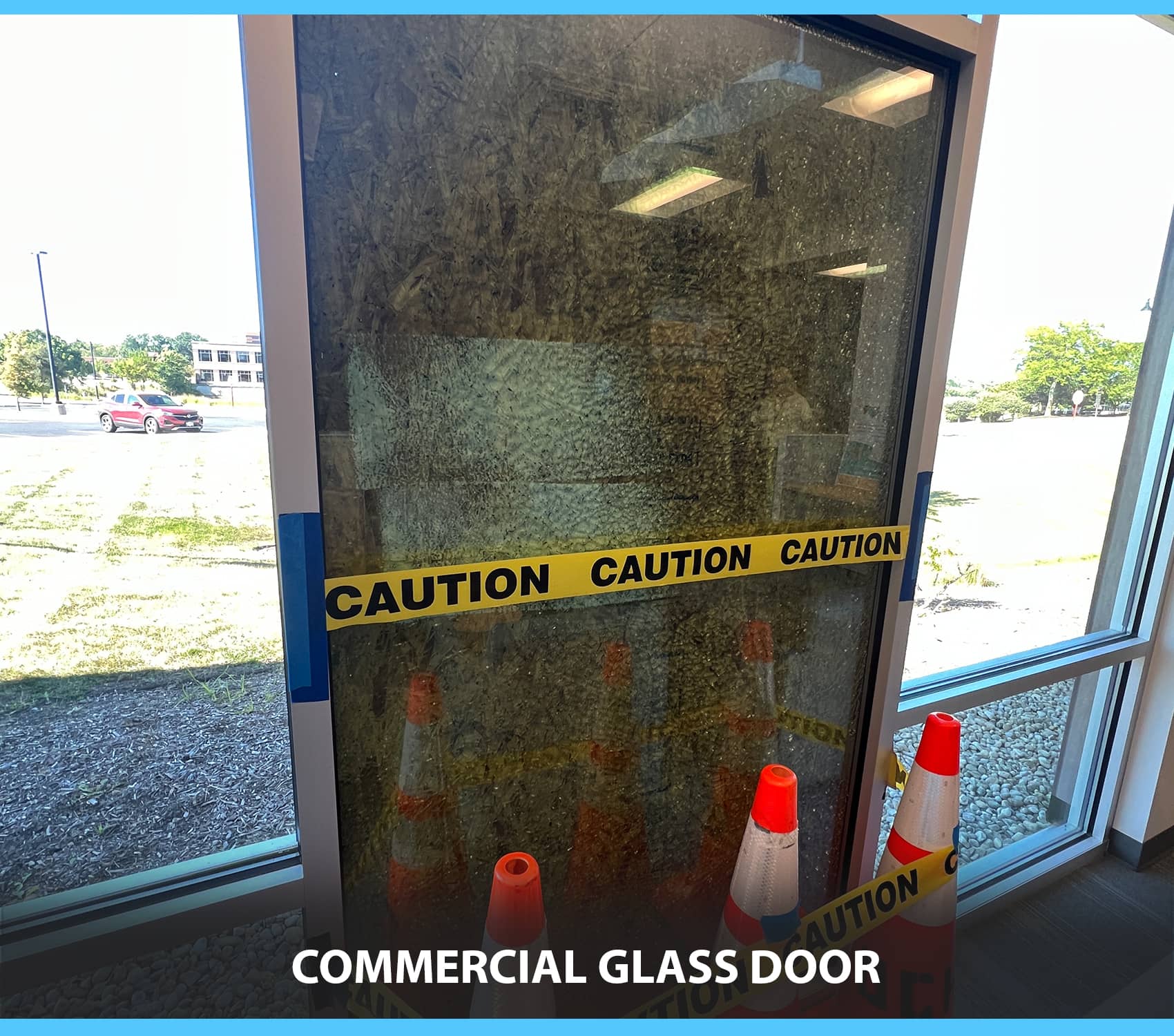
Why storefront repairs pay off
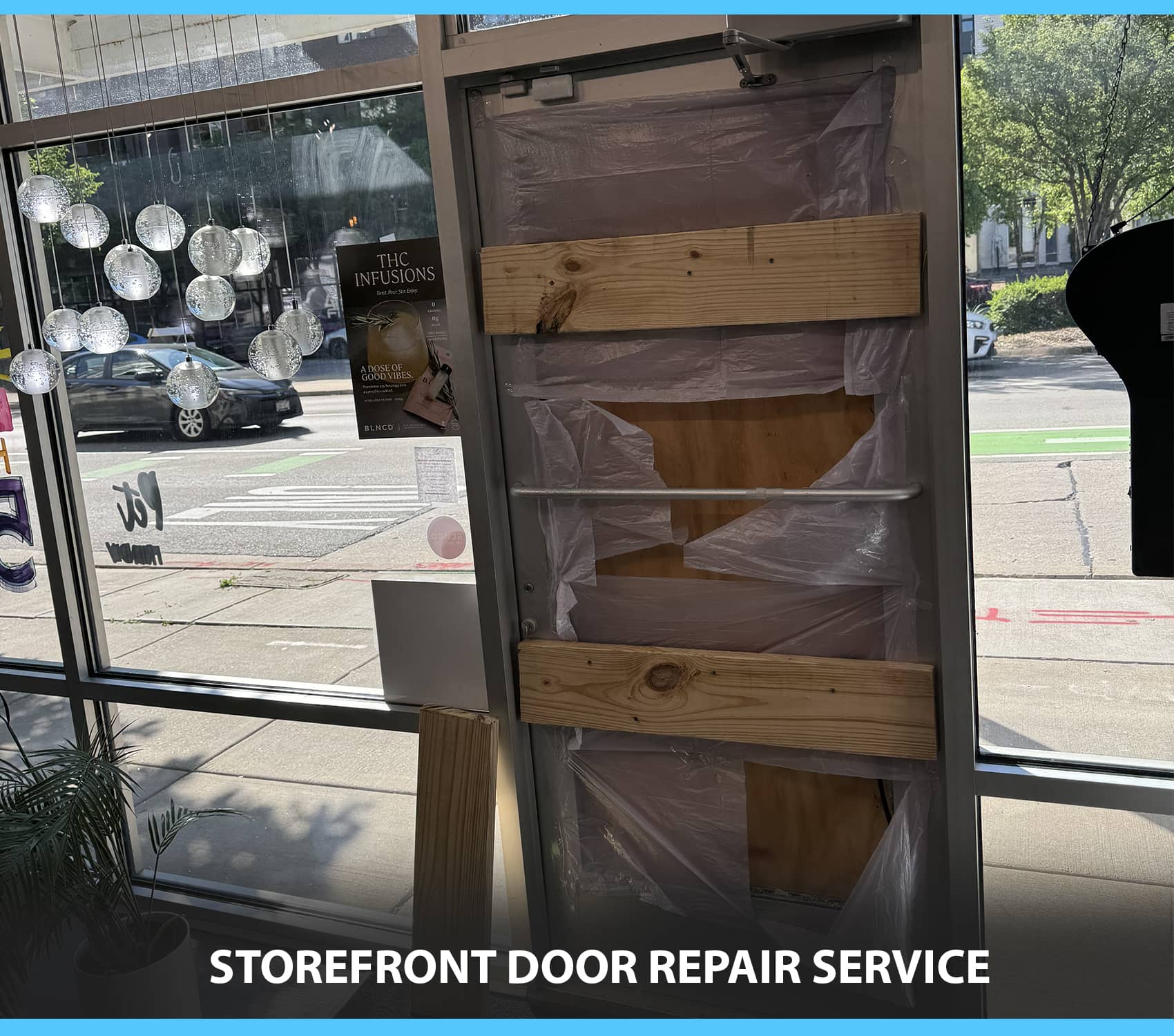
Why storefront repairs are worth doing comes down to one simple fact: a commercial entrance has to keep the day moving. When a door will not latch, starts sticking at the threshold, or a pane cracks, the cost is not limited to labor and materials. There is also lost time, security risk, weather exposure, and the extra damage that builds when staff and customers keep forcing a bad door to open and close. A proper repair protects three things at once: daily operation, energy performance during Charlotte’s colder months, and the overall security of the opening.
What commercial openings must deliver
Commercial entrances and storefront glass are expected to stay durable, efficient, and professional-looking under constant use. That usually means holding alignment, sealing tightly, and staying secure while dealing with real-world stress: wind pressure, freeze-thaw swings, constant opening cycles, and the wear that comes with busy storefront traffic. If the frame starts drifting, the glass rattles, or cold air shows up around the meeting points on windy days, the opening is already asking for attention.
What’s usually failing (symptoms → components)
A lot of "glass door" complaints turn out to be hardware trouble or alignment drift wearing a glass-door disguise. The smart place to start is with the symptom itself, then work backward to the part that is most likely causing it before anything gets replaced.
Glass and glazing failures
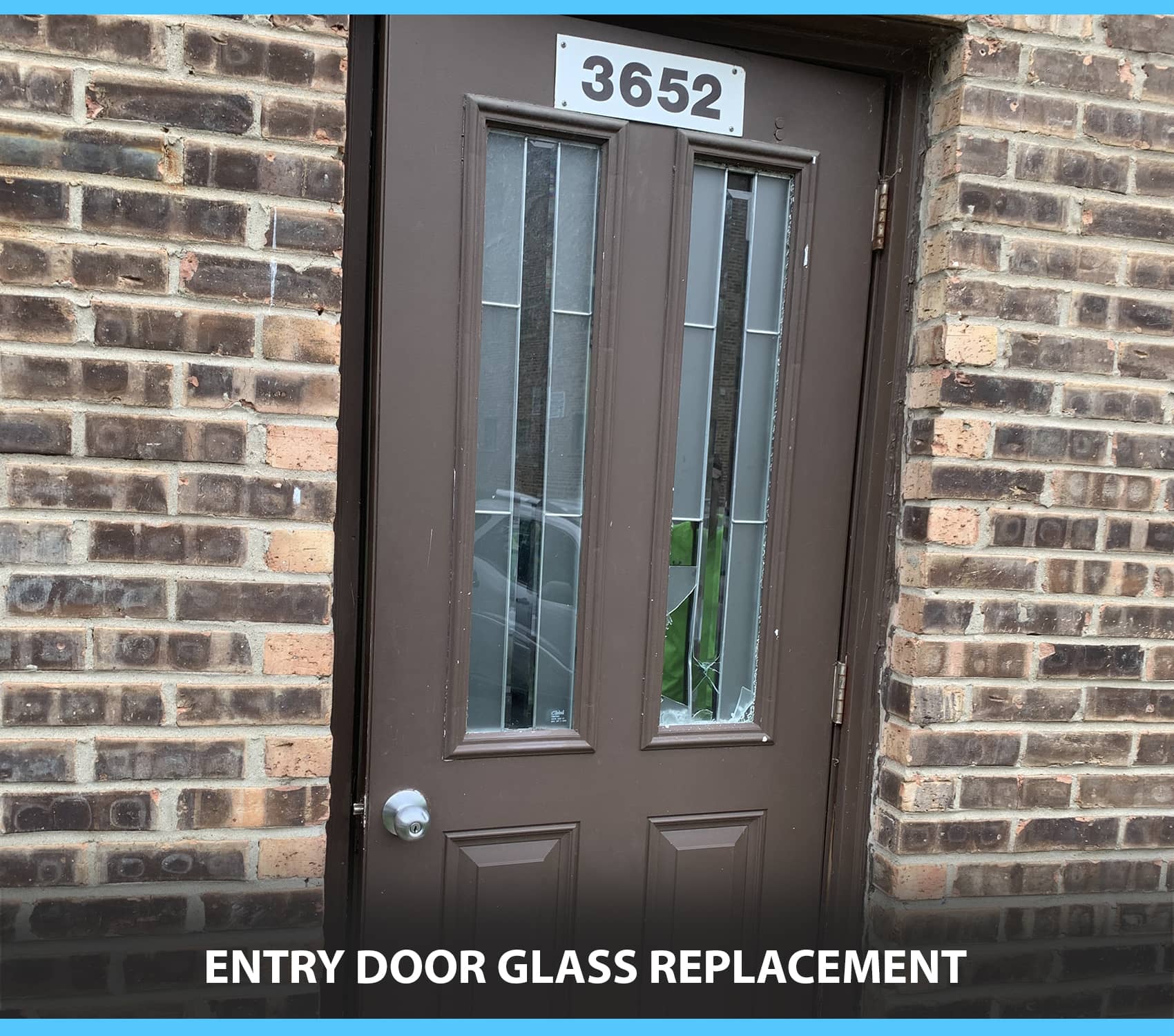
Broken, chipped, or fully shattered glass is the easy one to spot. The less obvious version shows up when the glass is still standing but the opening has already lost performance: loose glazing, small air leaks, and gaps that let in dust, grit, and street debris. Sometimes the first clue is a faint rattle in the panel or dirt collecting where the seal used to stay tight.
Frame and geometry issues
A warped frame or a bent section changes the shape of the whole opening. Once that happens, every part tied to that geometry starts paying for it. Latches stop lining up with strikes the way they should, hinges and pivots wear out sooner, and the door begins to drag, scrape, or bind near the threshold.
Door operation and hardware issues
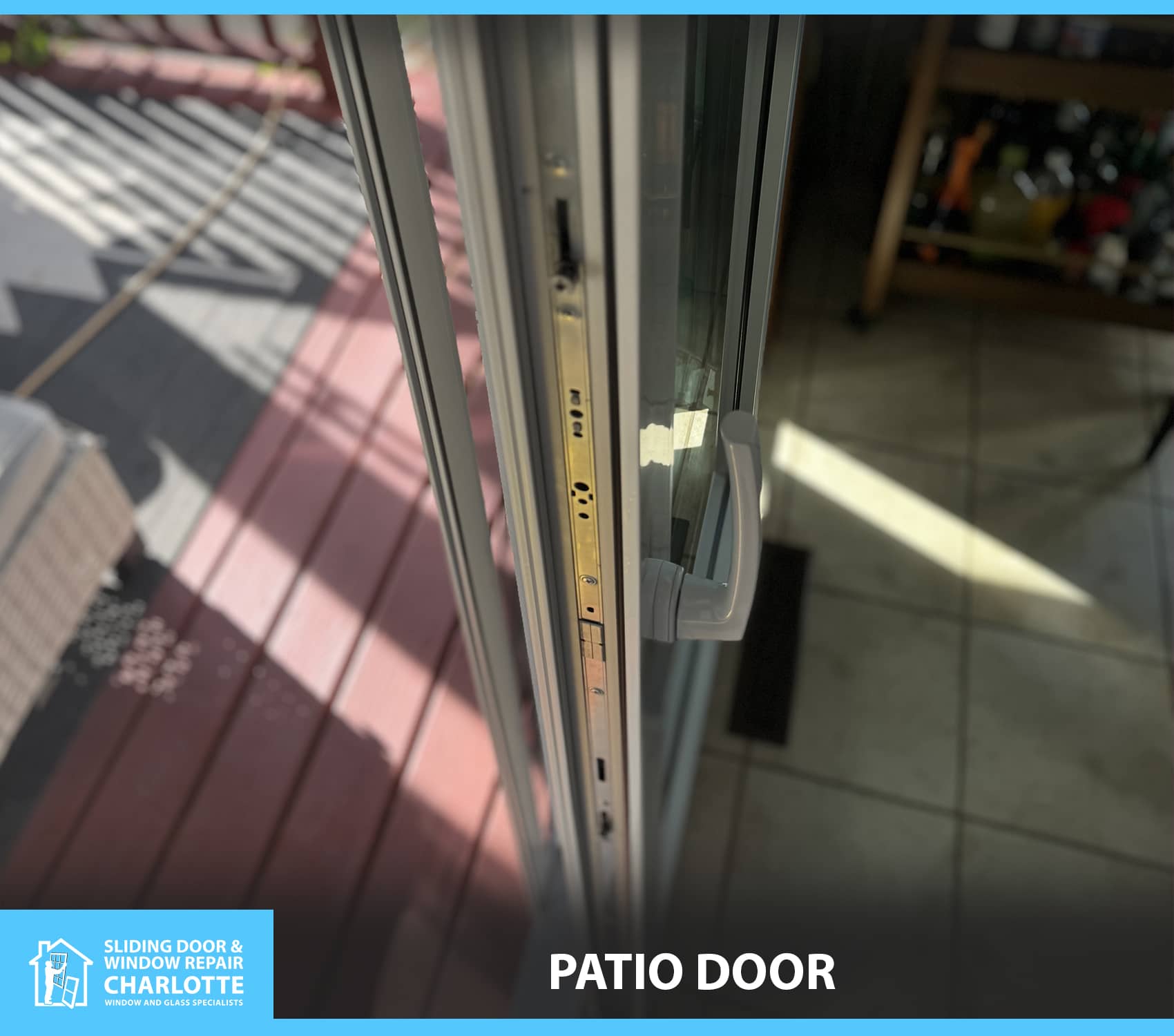
In commercial storefronts, the usual offenders are worn pivots or hinges, sticky locks, strikes that have shifted out of place, tired handles, and closers that no longer manage the swing with any consistency. Some doors slam. Others hang half open. Some only latch after a hard pull.
In real storefront conditions, the warning signs usually fall into a few familiar patterns. Harsh exposure can twist the opening just enough that the door stops closing cleanly. Heavy daily traffic keeps pounding the parts until periodic adjustments and replacement pieces are the only thing holding performance together. Pivot or hinge wear often starts with squeaks, wobble, or sloppy closing. Hardware faults get labeled as "bad locks," even though the real issue is often drag in the door, sticky movement, or a strike that no longer meets the latch where it should. The label matters less than the chain reaction. Once closing is even slightly off, everything downstream starts wearing faster: locks, strikes, closers, and even the glass itself.
Glass and performance options (choose the upgrade that solves the recurring pain)
Once the system is already being opened up, putting the same weak spot back in place rarely makes sense.
Tempered vs annealed: why it matters
Tempered glass shows up in storefronts for a reason. It is treated for added strength and for safer breakage behavior. When it fails, it usually breaks into smaller, duller pieces instead of the larger sharp shards more commonly associated with annealed glass.
Laminated and higher-security options
When security concerns are real, like repeated vandalism, attempted break-ins, or site-specific code and risk demands, glass selection stops being a simple replacement choice and turns into a protection decision. We offer products built around forced-entry resistance, along with higher-security categories for more serious exposure, including fire-rated lines, bullet-resistant assemblies, and impact-rated severe-weather products. The practical standard is simple: match the glass to the threat, not just to the damage left behind by the last failure.
Security film (when you want more protection without re-glazing everything)
In some cases, a meaningful security upgrade does not require full re-glazing. We can apply tear-resistant security film to existing storefront doors and window glass, making the surface harder to breach while still preserving daylight and visibility. The real advantage shows up after breakage. If the glass does fail, the film can hold the broken section together in larger pieces, which changes cleanup, reduces scatter, and cuts down the hazard field on the floor. It will not satisfy every performance requirement, but it is a legitimate option when better resistance and safer failure behavior matter more than a full system rebuild.
Storefront glass as identity (customization, not just replacement)
Storefront glass can do more than close an opening. It can also support wayfinding and presentation. We can customize replacement glass with business names, logos, street numbers, or hours, turning a repair into a chance to make the entrance clearer and more useful, not just intact again.
Efficiency and comfort upgrades
Better performance usually comes from the whole assembly, not one feature by itself. Glass type matters, but so do frame construction and seal quality. Common upgrade paths include low-E coatings, insulated frames, thermally broken aluminum, insulated glass units such as double-pane builds, and tinted glass when glare control, privacy, or solar gain become part of the problem. In Charlotte, that balance can matter on both sides of the year: summer sun through the front elevation, then cold drafts near the entry during winter spells.
Low-maintenance coatings
Some storefront glass products are sold with lower-maintenance coatings that help reduce dust buildup, spotting, and water marks. Those finishes can also be paired with low-E glass. When the entrance doubles as display space and street-facing visibility ties directly to sales, cutting down the cleaning burden is not a cosmetic extra. It is a practical specification choice.
What causes damage in the real world
Most storefront failures do not happen randomly. The same few causes show up again and again: constant foot traffic, Charlotte wind and winter ice, seasonal expansion and contraction, and direct impact events, including vehicle hits in exposed storefront rows. Moisture control belongs on that list too. Once joints start opening or drainage stops working the way it should, the system can begin to break down quietly, even while the glass still looks perfectly normal from the sidewalk.
When to repair, retrofit, or replace (the decision that saves money)
Money gets wasted fastest by replacing parts that still had a viable repair path. Regret usually shows up the other way around, when the visible symptom gets fixed but the underlying cause stays in place and keeps working damage into the opening.
A parts-based rule works well in real conditions:
- if the trouble comes from tired hardware, worn pivots, failing closers, or weathered seals, repair is often a solid path. If the glass is broken, the frame is bent, or the opening has lost structural integrity, replacement starts to make more sense.
Commercial doors add a middle option: retrofit. That is the lane for doors that are still worth saving but need extra support or upgraded components so the fix lasts, especially after years of heavy use, repeated sagging, or a security event that exposes a weak point.
Repair / Retrofit / Replace table
|
Situation you’re seeing
|
Most likely best move
|
Why that move fits
|
|
Door won’t latch unless you lift/pull it
|
Repair (alignment + strike/lock interface)
|
Often a geometry issue, not "bad hardware"
|
|
Door drags, binds, or twists
|
Repair or Retrofit
|
Binding accelerates wear; reinforcement may prevent repeat failure
|
|
Locks/handles inconsistent
|
Repair (hardware service)
|
Worn components can be serviced without replacing the whole opening
|
|
Air leaks, dust intrusion, gaps
|
Repair (seals + adjustment)
|
Restores performance and protects the assembly
|
|
Glass cracked/shattered
|
Replace the glass (and verify cause)
|
Broken glazing is not a "patch and forget" condition
|
|
Frame bent/warped beyond correction
|
Replace
|
Geometry won’t hold adjustments
|
|
Break-in/abuse at latch edge
|
Retrofit or Replace
|
Add protective hardware so security is real, not cosmetic
|
|
Storefront is very dated
|
Consider planned refresh
|
Age/appearance can justify a scheduled rebuild
|
A Go / Caution / No-Go decision tool
|
Go (repair now)
|
Caution (repair + retrofit)
|
No-Go (replace)
|
|
Door functions but is drifting
|
Door can be rehung and reinforced
|
Frame is compromised or glass is unsafe
|
|
Hardware/seals worn; opening still true
|
Repeat failures at hinge/latch zones
|
Opening won’t hold alignment after adjustment
|
|
Leaks/gaps fixable with fit + sealing
|
Security event or heavy-abuse environment
|
Cracks/shattered glass require replacement
|
Solutions by material and system type (doors, frames, storefront glazing)
Commercial door repair and storefront glass replacement get much easier once the actual system is identified. The core goal usually stays the same: bring the geometry back, tighten the seal, restore security. But the limits change depending on the material. Aluminum storefront framing, glass assemblies, and commercial door hardware each fail in their own way, and each one pushes the repair in a slightly different direction.
Material/system cheat sheet
|
Material / system you’re likely dealing with
|
Typical problems that show up
|
Typical solution path
|
When replacement is more likely
|
|
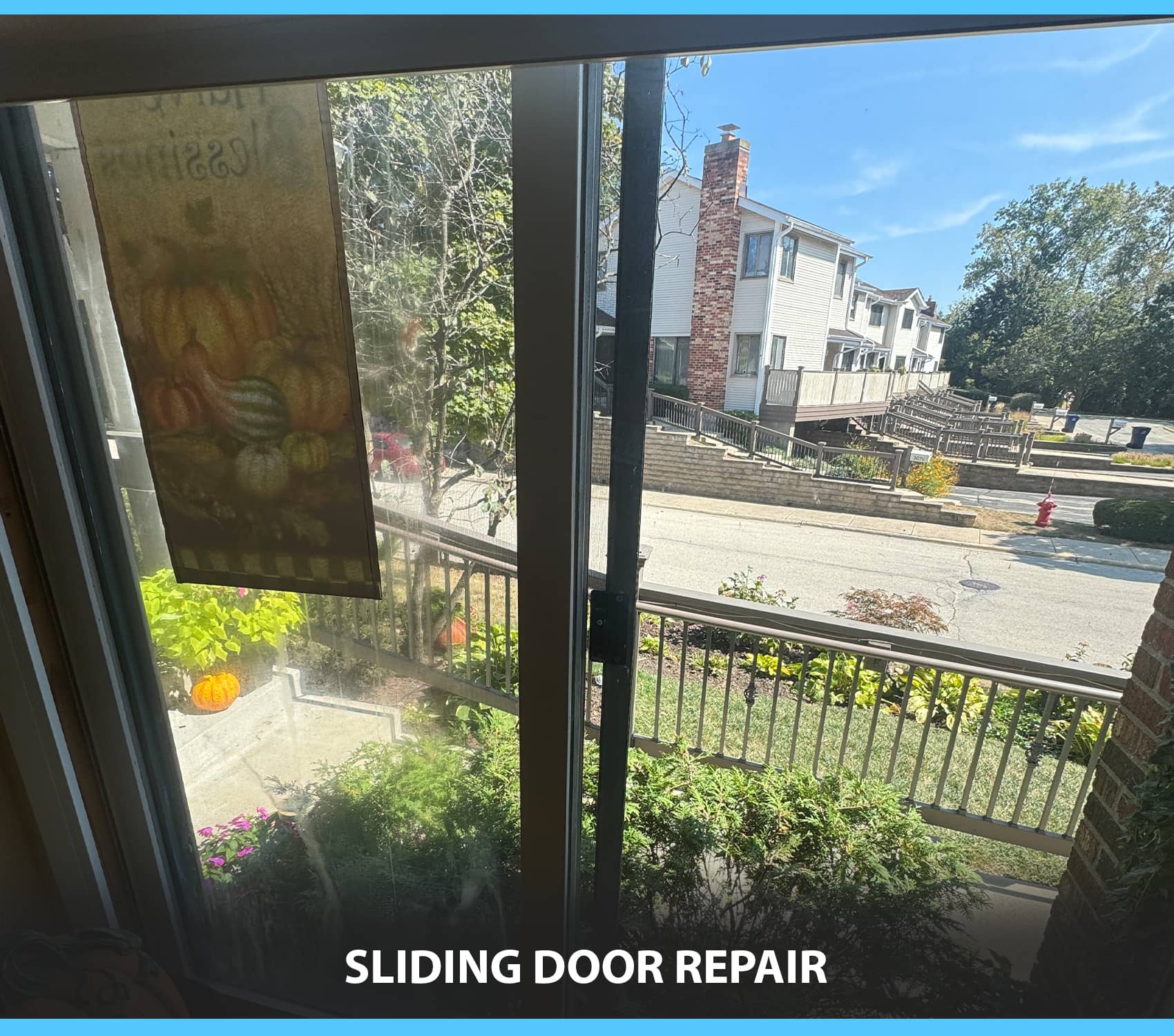
Glass storefront doors (including frameless and sliding variants)
|
Broken door glass, misalignment that "feels like a lock issue," closer/hinge wear
|
Replace door glass as needed; tune alignment; service closers/hinges/locks; consider stronger glass/security options if risk is recurring
|
If glass is broken and the surrounding structure won’t hold geometry
|
|
Aluminum storefront framing / profiles (often paired with energy-focused glazing)
|
Drift, gaps, heat loss, "stubborn hardware" from geometry changes
|
Restore fit; upgrade sealing; consider thermally broken aluminum profiles when rebuilding for performance
|
If the frame is bent/warped or repeated drift can’t be stabilized
|
|
Vinyl-profile components (less common for heavy storefront abuse, but present in some commercial systems)
|
Seal performance issues; finish/appearance concerns; heat-loss complaints
|
Repair and tighten sealing; refinishing/lamination/color refresh where applicable
|
If structure is compromised or the system can’t meet performance needs
|
|
Wood window systems (common in certain buildings; more sensitive to maintenance and fit)
|
Hardware/seal wear; performance drift; appearance degradation
|
Repair hardware/seals when feasible; planned replacement for performance refresh
|
If frames or glass units are beyond repair
|
|
Composite window systems (e.g., "Fibrex" category)
|
Similar to other window systems: seals/hardware drift, IGU issues
|
Diagnose and repair where possible; replace glass/frames when required
|
Broken glass or frame issues push replacement
|
|
Hollow metal & steel commercial doors (security/fire-resistance driven)
|
Abuse, forced-entry risk, latch-edge damage, frame/application constraints
|
Repair or rehang when possible; reinforce with guards/plates; confirm spec for fire/security needs
|
If damage creates a security risk requiring replacement
|
|
Wood commercial interior doors (inside offices/buildings)
|
Wear-and-tear, fit issues, hardware fatigue
|
Repair/adjust hardware; reinforce high-abuse points if needed
|
Less often replaced unless the door/frames are damaged beyond repair
|
Expert-level door upgrades that stop repeat failures
When a door keeps causing trouble, the answer is usually not one more adjustment. In most cases, the real fix is strengthening the points that keep losing alignment so the door can hold its shape under daily use.
Rehang and hinge strategy
Some damaged commercial doors are genuine security liabilities and do need to be replaced. Plenty of others do not. They can often be rehung, brought back into line, and stabilized instead of being thrown out. One retrofit method commercial door is rehanging the door with a continuous hinge approach, then adding latch-side protection so the repaired slab does not get dragged out of position again by traffic, wind pressure, or the constant slam-and-pull cycle of a busy entrance.
Latch-side protection (plates and guards)
Protective hardware works best when it matches the kind of abuse the opening actually takes. Commercial door specialists look on it in specific dimensions, not in vague terms or whatever looks fine on site. An armor plate is commonly treated as protection against carts and rolling equipment, with 36 inches often used as the standard height. Kick plates are usually specified in 8, 10, 12, and 16 inch versions, and the 16 inch size is often chosen where wheelchair contact is a real concern. Mop plates are typically listed in 4 and 6 inch heights to absorb the hits that come from cleaning tools and floor equipment.
A simple sizing guide matters here because protection should not be left to guesswork.
When it’s an installation project
Sometimes repair is no longer the right lane and the opening needs to be rebuilt: new framing, new glass, and a system chosen to hold up better over time. That decision usually comes down to specifics. A building rarely just “needs a door.” It needs the right commercial door type for the way the opening is used. The choice down in exactly those terms: steel-and-glass commercial doors, wood interior commercial doors, security doors, or a heavier industrial-grade setup. Once that part is clear, the frame and the install method stop being generic. The application starts calling the shots.
Frame and anchoring requirements can shift with both the opening and the wall behind it. One condition may call for a hollow metal jamb anchored into concrete, while another may require a different fastening method because of the surrounding wall buildout, including drywall-related differences. That is not a simple slab swap. It is a specification decision, and treating it any other way is how fit problems get built in from day one.
Door material can also be driven by the job requirements rather than appearance alone. Hollow metal and steel doors are often the default choice where stronger security or fire resistance is part of the brief. If those needs are present, they belong in the install plan up front, not as something discovered halfway through the project.
When the goal is better storefront energy performance, upgraded framing usually has to be part of the conversation too. Thermally broken aluminum systems and vinyl-profile storefront options are commonly treated as part of a planned replacement package, especially in a climate like Charlotte where solar gain, humidity, and winter cold snaps can all work against the entrance. That kind of upgrade works best when it is designed into the system, not tacked on later.
Conclusion
Commercial door repair and storefront glass replacement usually go sideways when each symptom gets treated like a separate issue. A better method starts with the system itself: identify the opening type and material, bring the geometry back where it belongs, restore the seal, and then reinforce the areas that keep taking abuse so the same breakdown does not come right back.
Repair is often the sensible first step when the problem is tied to seals, closers, locks, hinges, or other hardware. Replacement becomes harder to avoid when the glass is shattered or the frame has been compromised. Retrofit is the step that often makes the difference between a door that merely works again for now and a storefront entrance that stays secure, closes properly, and holds up through Charlotte traffic, weather swings, and day-to-day wear.