Why hopper windows matter in basements
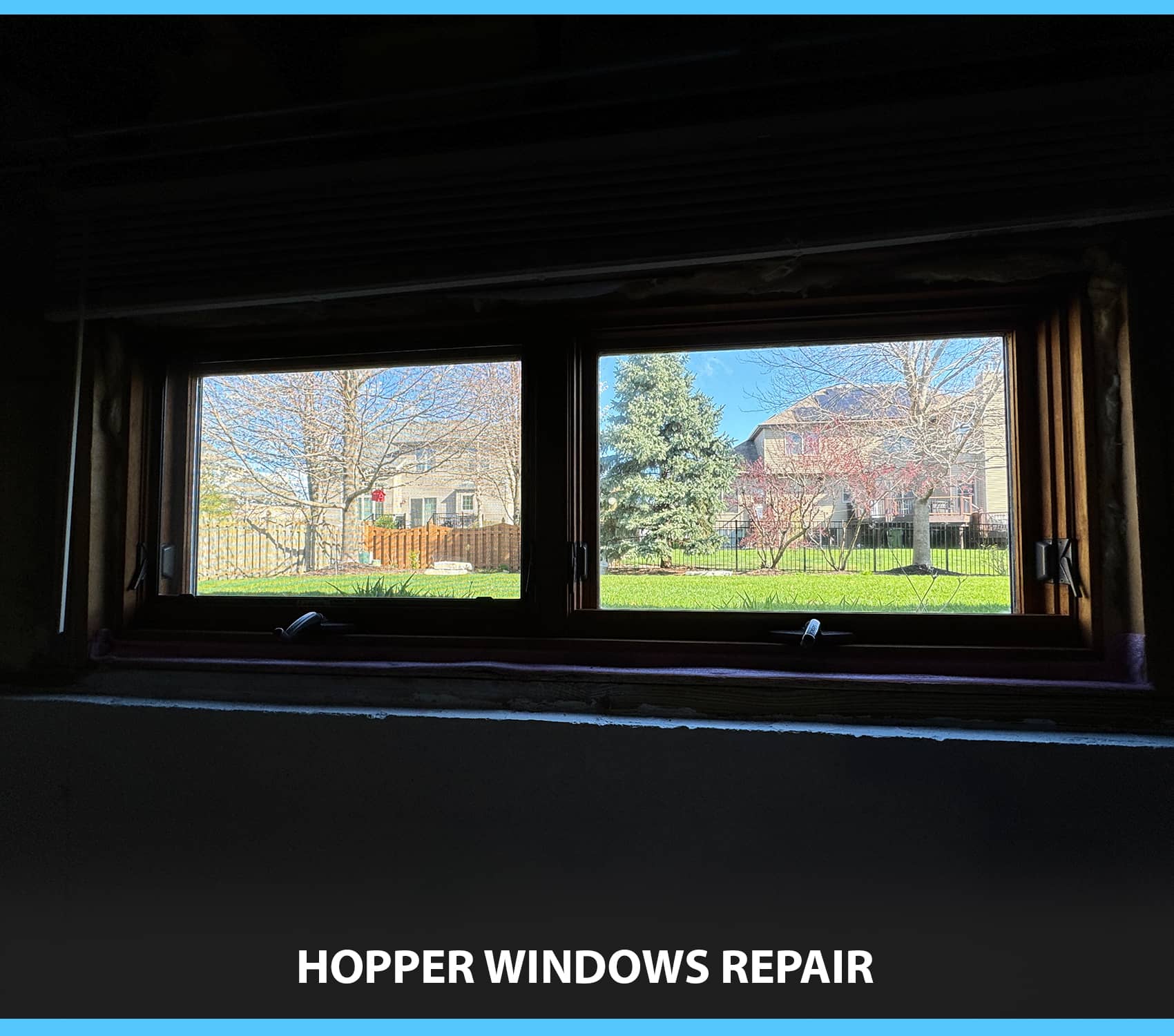
A small gap around the sash can turn into a cold strip across the floor through the winter. A slow leak can keep the sill damp long enough for paint to bubble, the wood to darken, and the lower corner to start feeling soft. Hopper windows show up in laundry rooms, bathrooms, and utility spaces. They fit tight openings and still bring in light and airflow without taking over the wall.
The upside is that many hopper window problems can be repaired without replacing the whole unit, as long as the frame is still solid and the sash can close evenly.
What a hopper window is (and what it isn’t)
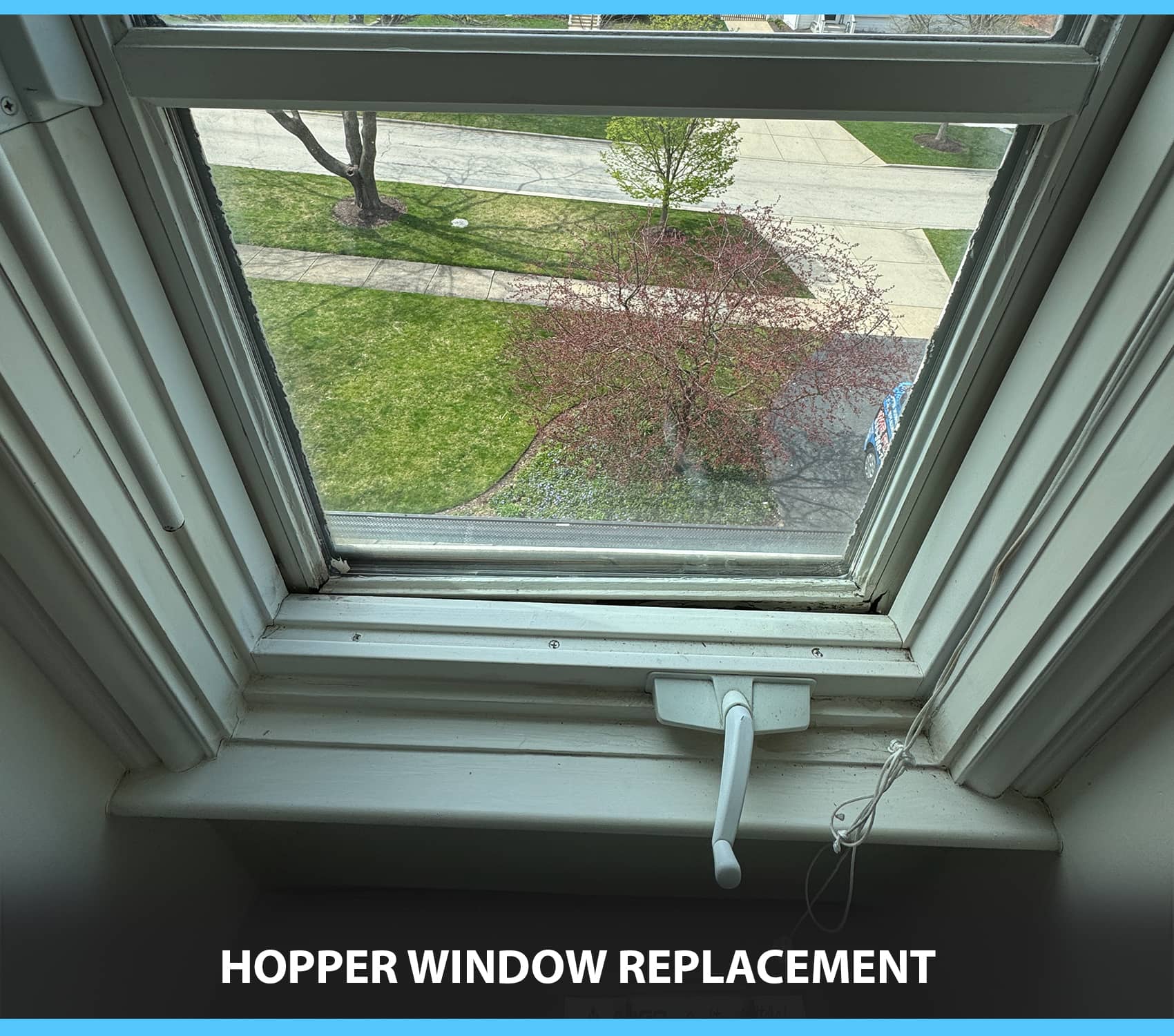
A hopper window is a small window that swings inward on hinges. The hinge position varies a little by model, but the basic idea stays the same: the sash opens into the room, and good performance depends on even contact around the full perimeter plus a latch that pulls everything closed snugly.
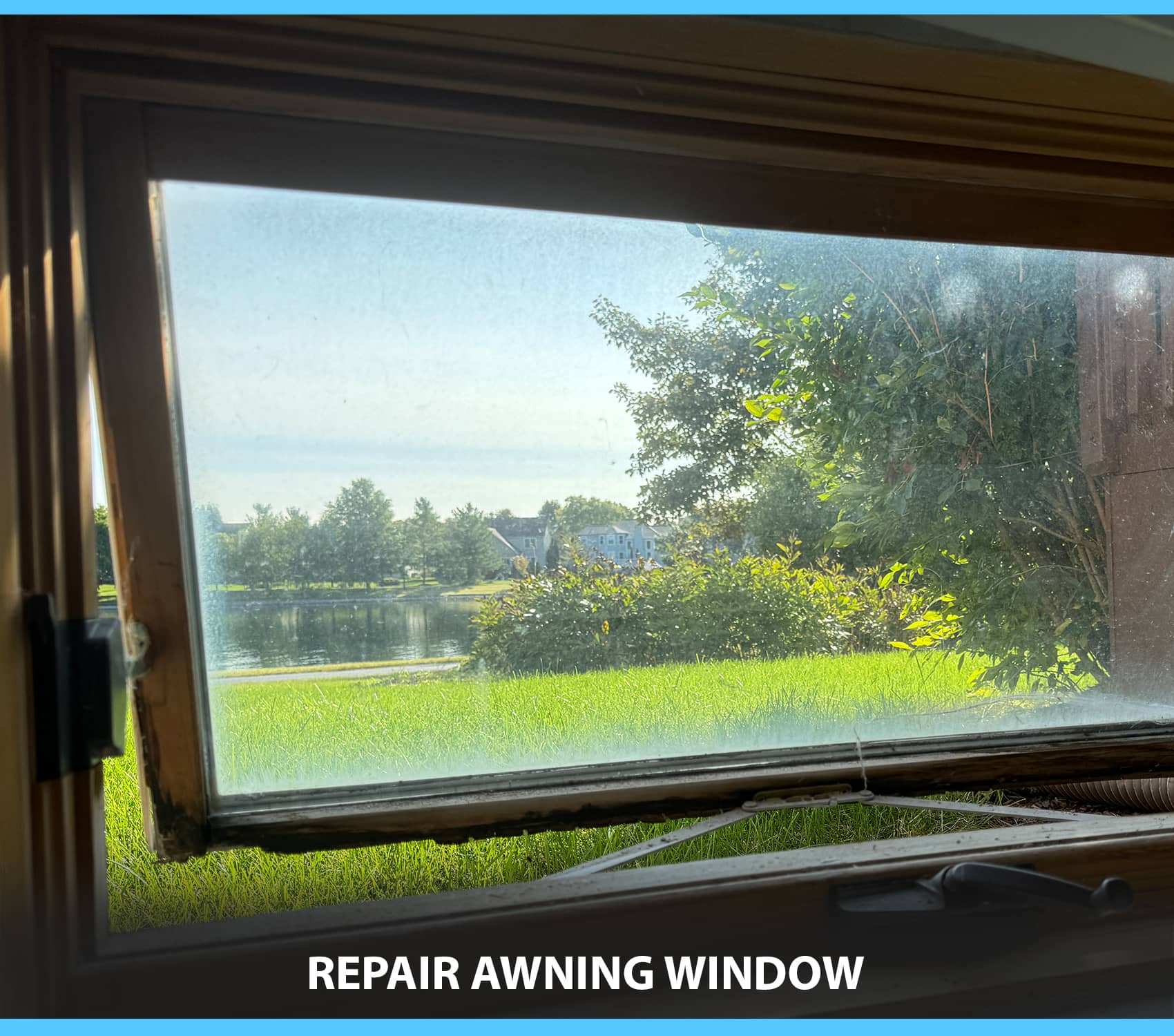
Hopper windows often get mixed up with awning windows because both use hinges. The easiest way to tell the difference is by the way they open. A hopper swings inward. An awning swings outward. In real life, that difference matters fast. An inward-opening sash needs clear space inside, whether that means nearby shelving, a deep stool, or a basement dehumidifier sitting too close to the opening. It also puts more stress on the latch and the weatherstripping. Once the sash starts closing slightly out of square, the seals stop pressing evenly, and that usually shows up as a draft on windy days, a light rattle, or a sash that sticks right before it latches.
That inward swing can also be an advantage. Many basement hopper windows are small and set low, so sightlines are naturally more limited than they are with larger windows at eye level. If privacy matters most, frosted or decorative glass usually handles it well. Security is more about a tight close, solid locking hardware, and the simple fact that most basement hoppers are not very large openings to begin with.
Common hopper window problems (symptoms → causes)
The practical way to handle a hopper problem is pretty simple: start with the symptom, pin down the actual cause, figure out which part is failing, fix the least invasive issue first, then add one step that keeps the problem from showing up again a few weeks later. That approach cuts out the guesswork. Otherwise, it is easy to tinker with a little of everything and still end up with the same draft when the next stretch of cold weather hits Charlotte.
Take a window that will not lock. In a lot of cases, the problem is not just the lock itself. More often, there is some corrosion, everyday wear, and a sash that is no longer landing square in the frame. The trouble spots are usually the latch, the lock, and the alignment points that let the sash seat tightly. The repair is a mix of hardware service and adjustment so the sash closes snug again. After that, basic upkeep matters: no slamming, and a little light lubricant on the hardware now and then so parts do not start binding and shifting out of line.
Sticking, binding, or hard to open
When the sash starts putting up a fight, the usual causes are dirty hinges, corrosion, paint buildup on moving parts, or a sash and frame that have drifted slightly out of square. Hinge service and proper lubrication can solve plenty of those cases. But if a hinge is bent, rusted through, or the sash twists a little every time it opens, a fast shot from a spray can is not going to last. At that point, the real repair is part replacement and alignment work.
Drafts, whistling, or “cold air around the edges”
Most drafts trace back to worn weatherstripping, flattened seals, or a latch that no longer pulls the sash in tight. A hopper can look fully closed and still leak air if it is closing unevenly. That is common with older basement units. Fresh seals help only when the closing pressure is corrected too. Without that, the new material never compresses the way it should, and the air leak stays right where it was. On windy days, that often shows up as a faint whistle or a cold edge along the sill.
Water leaks and moisture intrusion
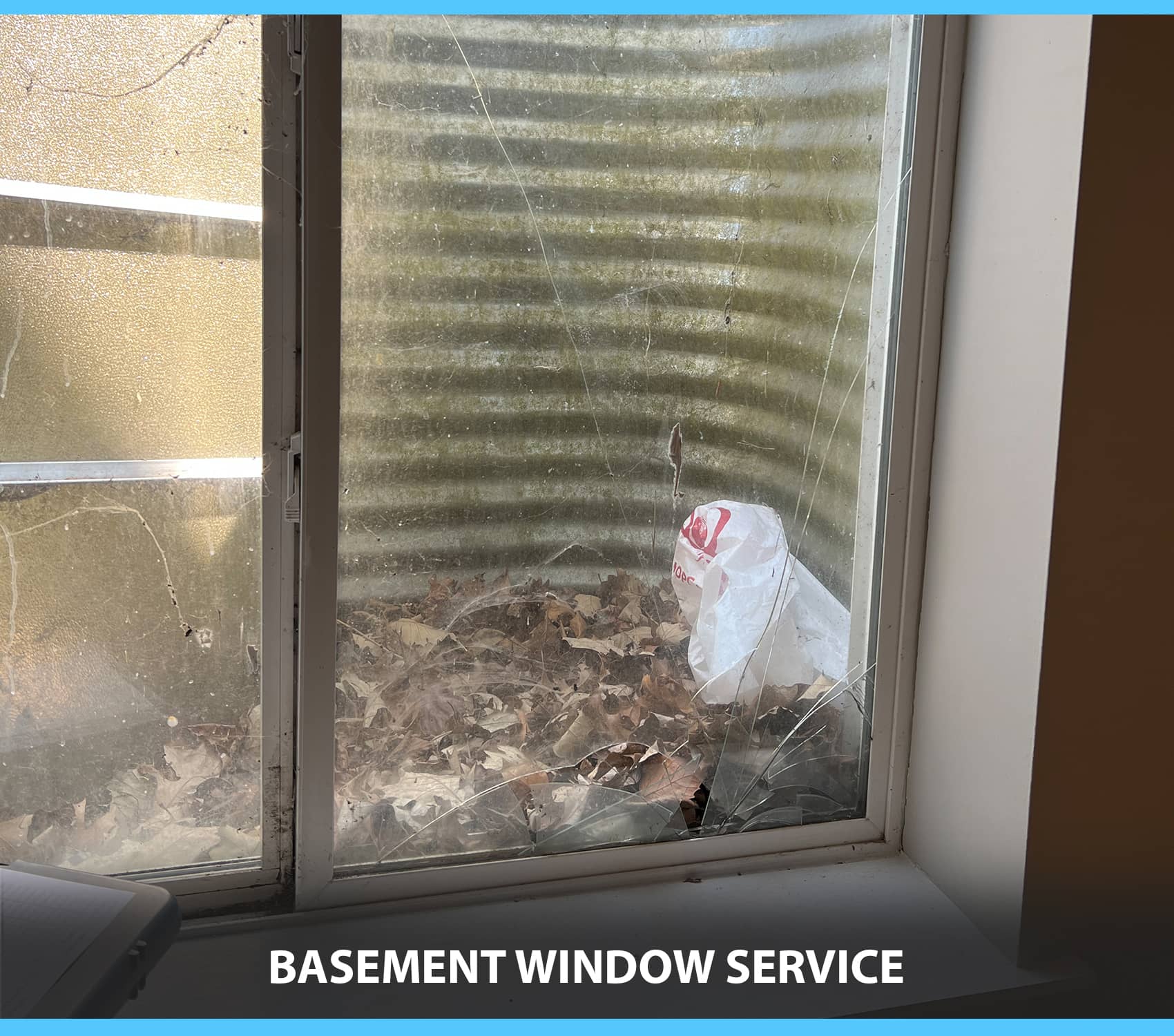
Basement leaks do not always announce themselves with an obvious drip. More often, the first clues are damp paint, darkened trim, a musty smell near the sill, or a lower corner that stays wet longer than it should. In Charlotte-area basements and crawl-adjacent spaces, the cause is usually a combination of aging sealant, small gaps that open and close with seasonal movement, and drainage trouble outside, especially around the window well. The first areas to suffer are usually the seals, the frame, and the drainage path around the opening. Leave that moisture alone long enough, and a minor leak can turn into stained block, moldy drywall, and soft wood around the unit.
When water is entering from outside, interior caulk by itself usually does not solve much for long. A lasting repair usually takes both sides of the problem: sealing the window properly and making sure water outside can move away from the opening instead of collecting there. If leaks keep coming back after seal work, that is usually the point to check the window-well drainage and, when the setup calls for it, look at adding a window-well cover.
Condensation issues (two different kinds)
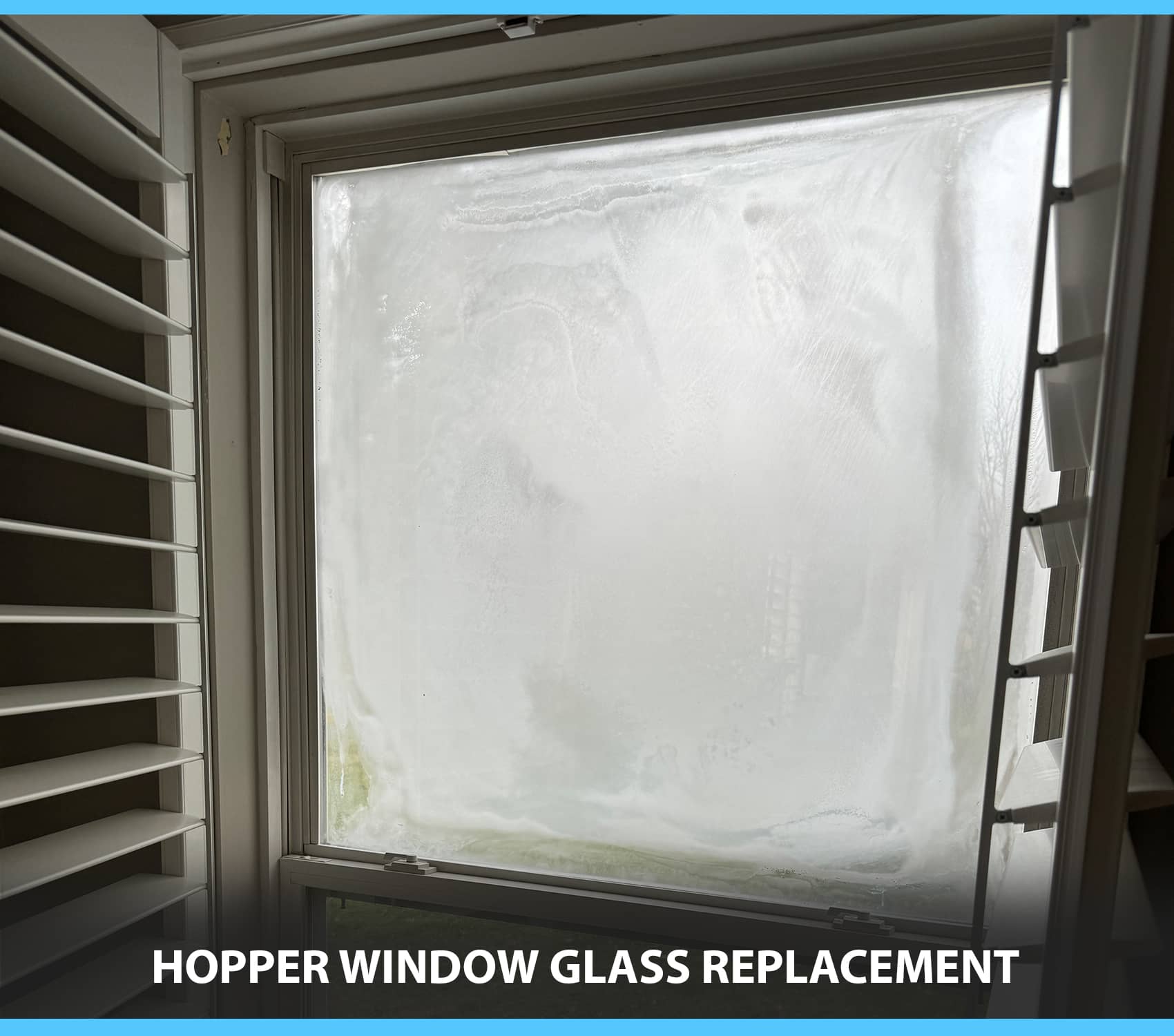
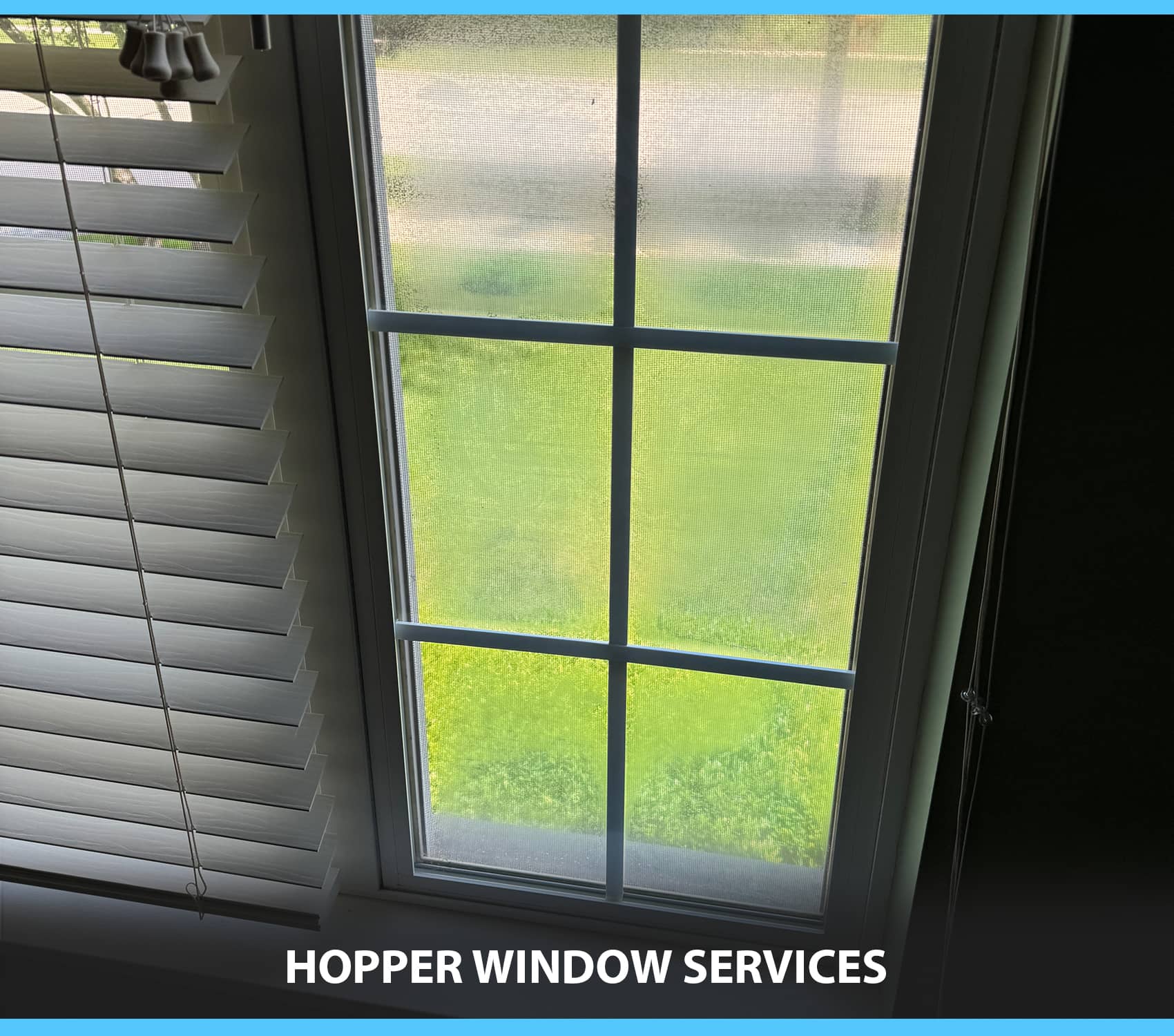
Condensation is not always the same problem. Moisture forming on the room-side surface of the glass usually means indoor humidity is meeting a cold pane, and air sneaking around the frame often makes it worse. Moisture showing up between the panes is something else entirely. That usually points to a failed seal in the insulated glass unit (IGU). It cannot be wiped away because the moisture is trapped inside the glass assembly itself.
Foggy glass or moisture between panes (IGU failure)
Once the IGU seal gives out, moisture can slip into the space between the panes, and the insulating gas that helped the window perform properly can leak away. That is what causes the cloudy, hazy look, and it is also why the window stops holding temperature the way it once did. In most cases, the practical repair is replacing the insulated glass unit, provided the sash and frame are still solid enough to support the new glass correctly. If the frame has loosened up, warped, or started breaking down, replacing the glass alone can turn into an expensive loop with the same problem waiting around the corner.
Cracked or broken glass
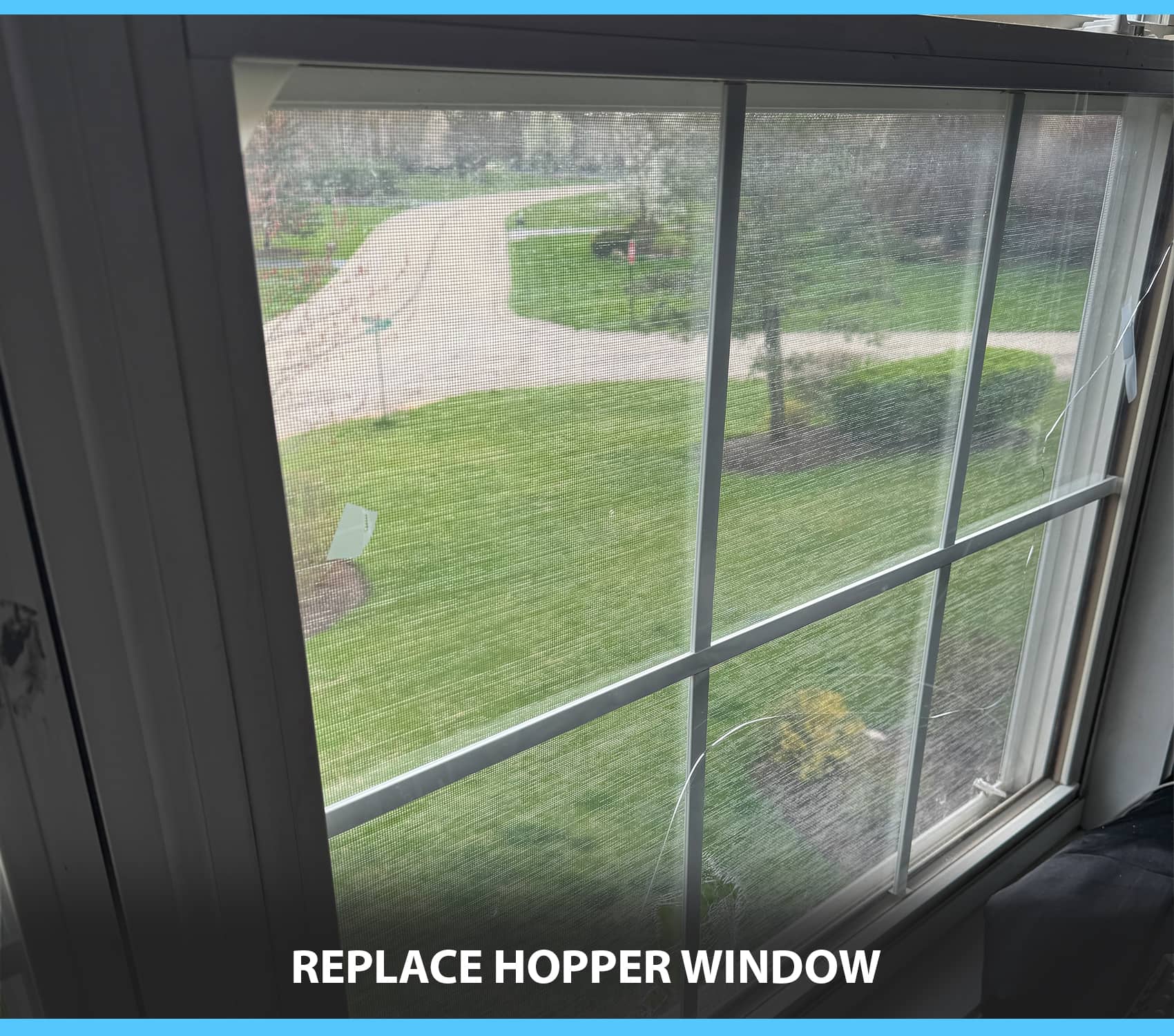
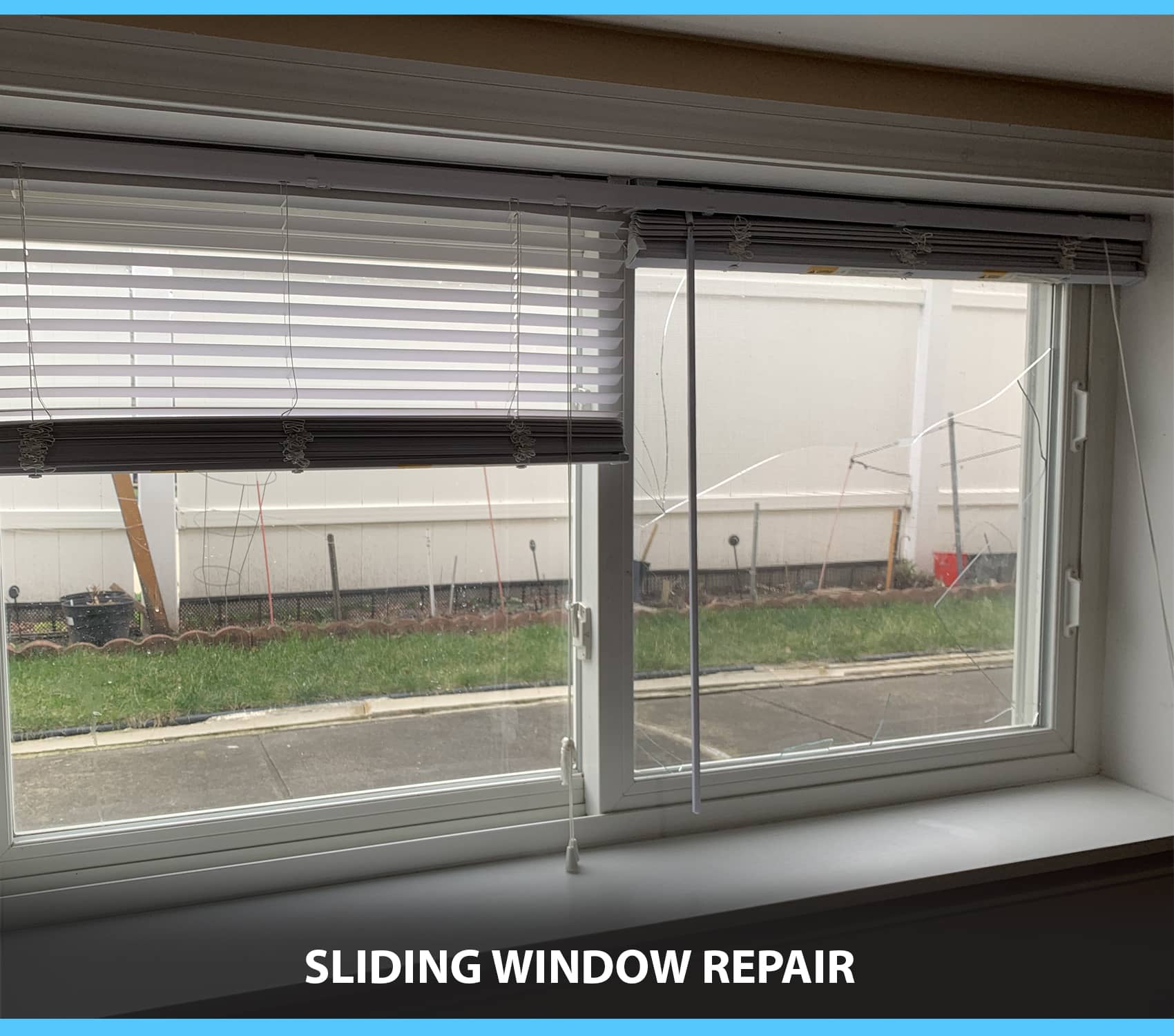
Hopper glass takes abuse. It gets bumped by tools, hit by debris, and put through temperature swings. Even a small crack can spread farther than expected, and once it starts moving, both safety and insulation are compromised. At that stage, glass replacement is usually the sensible fix. But if cracks keep returning, or the sash looks like it is twisting as it opens and closes, the real issue is probably deeper. Hardware trouble, alignment problems, or frame stress need to be corrected too, or the next pane may fail the same way.
Latch and lock problems
A hopper window that refuses to lock is often signaling an alignment problem, not just a bad lock. Corrosion is common, regular wear adds up, and forceful closing can knock things even farther out of line. Moisture also causes lock parts to bind. Once that starts, the sash often gets pushed or slammed harder, which only makes the fit worse. The repair is usually straightforward, but it has to be precise: service or replace the hardware, then make sure the latch catches fully and pulls the sash in tight. That full pull is what matters. It is what gives the window a proper seal and a more secure close.
Frame deterioration and soft wood
When painted wood near the sill or at the lower corners starts feeling soft, or bubbled paint and dark staining keep coming back, moisture has usually been feeding decay for a while. It is not just a cosmetic issue. Once that damage spreads, the window can stop sitting square, and that affects operation, energy performance, and security at the same time. A damp sill after rain or a dark patch that never seems to dry out is usually a bad sign. At that point, the repair moves into frame and sill restoration, or into replacement, depending on how deep the damage goes and how far it has spread.
Screen problems
Screens are easy to forget about until fresh air actually matters. Torn mesh is the obvious issue, but a loose screen frame can be just as frustrating. It rattles, leaves small gaps, and turns simple ventilation into an invitation for insects, dust, and yard debris. Good screen service is not only about swapping out mesh. It is also about getting the screen to sit tight in place so it does not shift, pop loose, or buzz against the frame every time the window is opened.
Material-specific repair and replacement notes (wood, vinyl, fiberglass/composite)
Hopper windows tend to run into the same categories of trouble no matter what they are made from, but the right fix still depends on the frame material and the way the unit was built.
Wood hopper windows (common problem: moisture-driven deterioration)
Wood usually gives water damage away early. Soft areas, dark marks, bubbled paint, swelling along the sill, and joints that start opening up are all common signs. In Charlotte-area conditions, that often starts with long-term dampness rather than one obvious leak. The repair sequence usually begins with stopping the moisture source and getting the sealing back under control, then rebuilding the parts that have lost strength. A solid wood repair often includes sash repair with reinforcement, sill repair plus waterproofing so the base is not staying damp, and frame restoration so the window can sit square and latch properly again. When decay is limited to a small section, restoration can be a worthwhile save. When large sections feel soft, or the unit still will not hold alignment after repair, replacement is usually what finally breaks the cycle.
Vinyl hopper windows (common problem: sealing and hardware alignment)
Vinyl is a common basement choice because it handles damp conditions without following the same rot path as wood. Even so, most service calls still come back to seals and hardware. Weatherstripping wears down, latches stop pulling the sash in tight, and hinges start working out of line. On replacement vinyl units, a few construction details usually tell a lot about how well the window may hold up over time: multi-chamber framing, fusion-welded sash and frame corners, continuous rigid seals, and lock hardware that closes firmly without feeling flimsy. None of that makes up for a bad install, but those details do give the window a better shot at staying tight.
Once a vinyl frame is cracked, bowed, or no longer able to stay in alignment, repair options usually narrow pretty fast. At that stage, the choice is often between replacing major parts, if those parts still exist, or replacing the whole window.
Fiberglass/composite hopper windows (common problem: usually not rot—more often hardware and sealing)
Fiberglass and composite frames are often picked for stability and long-term durability, especially where temperature swings put stress on ordinary materials. In service calls, the trouble is usually not rotted framing. More often, it comes down to aging seals, worn hardware, or glass problems. Still, even a stable frame can leak air or water if the installation is off or the sash is no longer closing square. A good frame helps, but it does not cancel out closure and sealing issues.
Material quick-pick table (what to choose, what to watch)
|
Material
|
Best when…
|
Typical service focus
|
Replace when…
|
|
Wood
|
You’re matching existing wood trim or want refinishable interiors
|
Stop moisture entry, restore sash/sill/frame so the unit can latch square
|
Softness is widespread, structure won’t stay square, or rot returns repeatedly
|
|
Vinyl
|
You want low-maintenance basement performance
|
Restore seals and closure pressure, service hinges/locks, keep screens fitting tight
|
Frame is cracked/warped and won’t hold alignment
|
|
Fiberglass / Composite
|
You want stability and durability through seasonal swings
|
Hardware service, sealing tune-ups, IGU replacement when glass fails
|
The unit can’t seal due to opening issues or installation failures that can’t be corrected
|
Maintenance that prevents repeat failures
Hopper windows usually respond well to basic upkeep. Clean the glass and frame at least twice a year with mild soap and warm water so dirt and grit do not wear down the hinges or chew up the seals. Harsh cleaners are not worth it. They can scratch the surface and leave the window looking worse than before. On vinyl or fiberglass frames, stick with a cleaner that will not damage the finish, and if the hopper has a screen, pull it out once in a while and wash it off so dust, lint, and grime do not build up.
About every six months, add a silicone-based lubricant to the hinges and locking points so the sash does not start sticking or dragging. With each season, especially before winter or long rainy spells in the Charlotte area, check the weatherstripping and gaskets. Once they turn stiff, start peeling, or show small cracks, they stop compressing the way they should, and the drafts tend to come right back. It also helps to keep the drainage holes along the bottom of the frame open. Low-set windows collect water faster than most people expect, and blocked drainage is often what turns a little moisture into a sill that stays damp or paint that starts bubbling near the corners.
When condensation keeps showing up, it usually needs to be looked at from both sides: the window itself and the basement air. Sealing matters, but so do humidity control and steady airflow. If the glass is fogging up between the panes, though, that is usually not a dehumidifier problem. In most cases, it points to a failed IGU.
Conclusion
Hopper windows are small, but they do a lot of heavy lifting. The best outcome usually comes from matching the repair to the real failure: replace the IGU when moisture is trapped between panes, restore sealing and closure pressure when drafts start creeping in, service hinges and hardware when operation or locking goes off, and take water problems seriously before they turn into soft wood, bubbled paint, and repeat service calls.
When the frame is still solid, repair often makes better sense than full replacement. When the frame will not stay square, or moisture and rot have already weakened the structure, replacement is usually the cleaner long-term answer. That is especially true in a damp, below-grade setting around Charlotte, where the right material, the right glass package, and a properly verified installer can make the difference between a lasting fix and the same problem showing up again.